


 Spanish
 Russian
 Arabic


Products Description
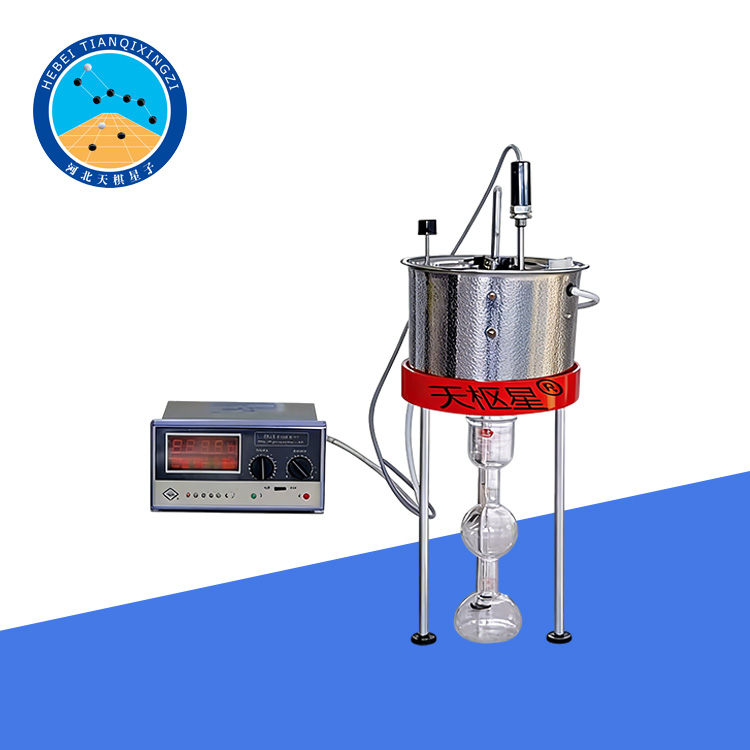
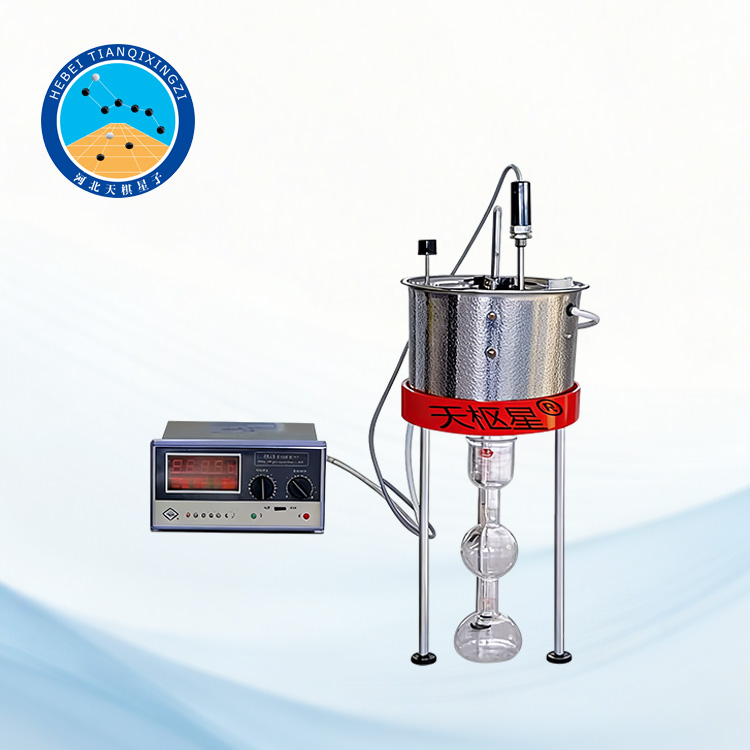
The Engler Viscometer is a professional laboratory instrument used to measure the Engler viscosity of asphalt and petroleum products. It provides accurate, reliable viscosity measurements under controlled temperature and volume conditions, making it essential for asphalt quality control, road construction, and petroleum product testing.
Asphalt Engler Viscometer
Model:TD622-1
I. Product Introduction
The Engler Viscometer is manufactured by Hebei Tianqixingzi Inspection Equipment Co., Ltd. in accordance with the requirements of the Chinese industry standard JTG 3410 “Standard Test Methods of Asphalt and Asphalt Mixture for Highway Engineering” (T 0622-2025 “Standard Viscosity Test of Emulsified Asphalt by Engler Viscometer Method”) and the national standard GB/T 266 “Determination of Engler Viscosity of Petroleum Products”.
It is used to determine the Engler viscosity of asphalt or other petroleum products under specified temperature and volume conditions. The Engler viscosity is calculated as the ratio of the flow time (in seconds) of the asphalt or petroleum product through the Engler viscometer to the flow time (in seconds) of distilled water at 25 °C. The unit of measurement is Engler degrees (°E).
II. Product Features:
1. The instrument consists of a testing apparatus and a temperature controller. It has a benchtop structure, with both the inner and outer pots made of stainless steel. The interior of the inner pot undergoes special treatment, ensuring a smooth finish that meets testing requirements.
2. The temperature controller is a digital temperature controller with P, I, and D position adjustment functions. Parameter settings are convenient, and temperature control accuracy is high.
III. Technical Parameters:
1. Standard Water Value: 51±1 seconds (When the standard water temperature is 20±0.1℃ and 200ml of water, it can be converted to 25±0.1℃ and 50ml of water)
2. Measuring Temperature: 0~100℃
3. Temperature Control Accuracy: ±0.1℃
4. Thermometer: Meets the requirements of T 0622 standard
5. Volumetric Flask Specification: 100ml
6. Inner pot: Stainless steel
7. Electric heater power: 550W
8. Electronic stopwatch accuracy: 0.01 seconds
9. Dimensions: 400X300X200mm
IV. Instructions for Use:
1.Carefully clean the inner container and the outlet tube of the viscometer in sequence using xylene and distilled water. Remove any remaining water with filter paper, and then dry with air (do not wipe with a cloth).
2.Place the viscometer on a tripod, and insert a clean wooden stopper into the outlet hole of the inner container.
3. Clean the receiving bottle sequentially with gasoline, detergent, water, and distilled water, then dry it in an oven (105℃±5℃).
4. Filter the prepared emulsified asphalt sample through a 1.18mm sieve.
5. Determine the water value (tW) of the viscometer using one of the following two methods:
1) Measure the time (s) required for 50 ml of distilled water to flow from the viscometer at 25°C, and use this as the water value.
2)Measure the time (in seconds) required for 200 ml of distilled water to flow out of the viscometer at 20 °C, and multiply by the conversion factor F to obtain the result.
V. Test Procedure:
1. Sieve the sample and preheat it to a temperature approximately 2 °C above the specified test temperature. Pour the sample into the clean inner container with the wooden stopper properly inserted (do not force it in to avoid rapid wear). Ensure the liquid level is slightly above the tip of the pointed pin, and that no air bubbles are present in the sample. Cover the viscometer with its lid and insert the thermometer.
2. Prepare the water in the outer container in advance, preheating it to a temperature slightly higher than the test temperature.
3.Place a clean 50 ml sample receiving bottle under the outlet tube. Adjust the temperature of the sample in the inner container and the water in the outer container to the specified test temperature of 25 °C ± 0.1 °C. To maintain the sample temperature, the temperature difference between the liquid levels in the inner and outer containers should not exceed ±0.2 °C during the test.
Note: When controlling the temperature, the temperature of the humidifying liquid in the outer container should generally be slightly higher than that of the sample in the inner container.
4. Once the sample temperature reaches the test temperature and is maintained for 2 minutes, quickly raise the cork, ensuring the cork is raised to the same position as when the water content was measured.
5. When the sample flows to the first mark (50 ml), start the stopwatch. When it reaches the second mark (100 ml), immediately stop the stopwatch and record the time, accurate to 0.2 seconds.
