


 Spanish
 Russian
 Arabic

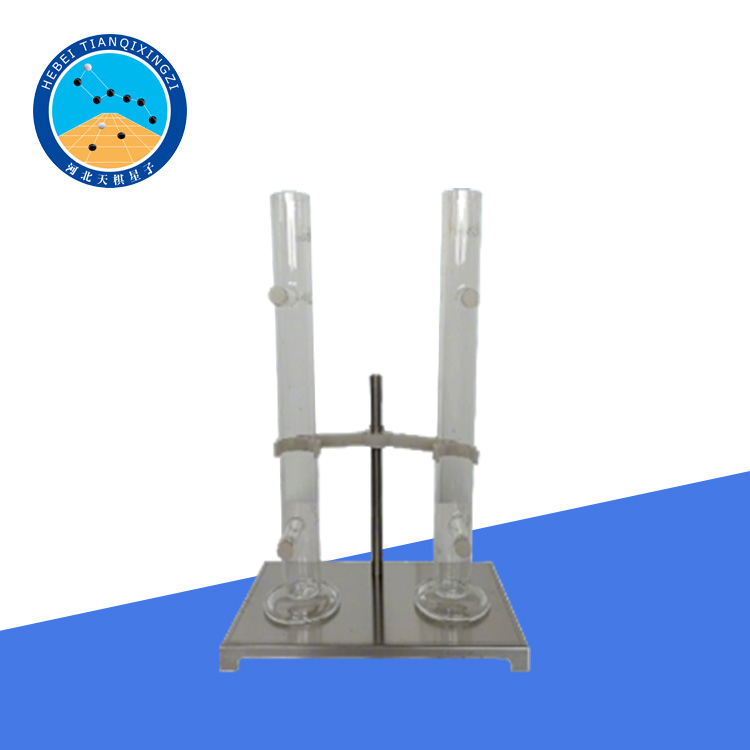

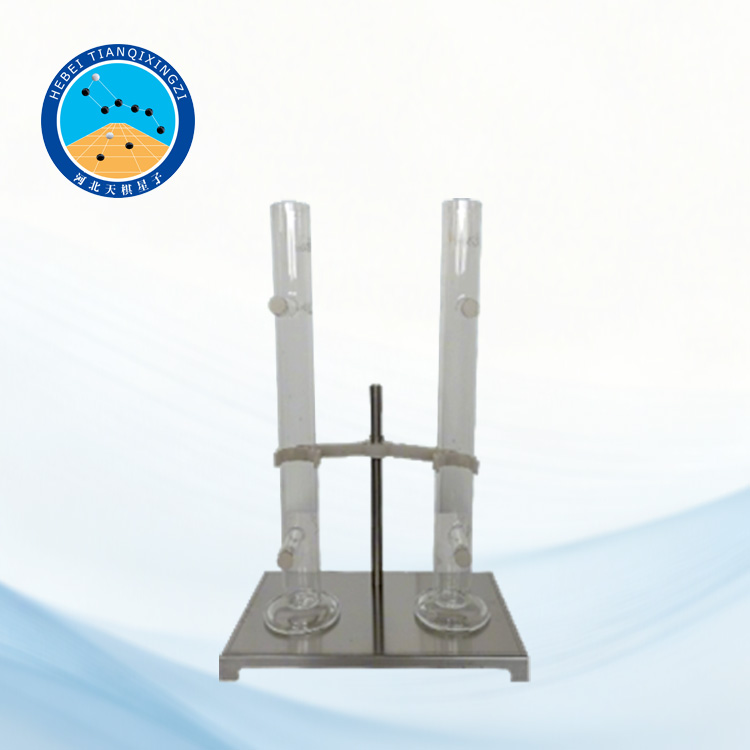
Products Description
The Emulsified Asphalt Storage Stability Tester is used to determine the storage stability of various emulsified asphalts by measuring the difference in evaporation residue content between the upper and lower portions of a stored sample. It is an essential laboratory instrument for evaluating the uniformity, dispersion stability, and quality consistency of asphalt emulsions in highway engineering and quality control testing.
Asphalt Storage Stability Tester
Model:TD655-1
I. Product Introduction
The emulsified asphalt storage stability tester was developed and manufactured by Hebei Tianqixingzi Inspection Equipment Co., Ltd. based on T 0655—1993 "Emulsified Asphalt Storage Stability Test" in JTG 3410-2025 "Standard Test Methods of Asphalt and Asphalt Mixture for Highway Engineering", and refer to standard ASTM D6930.
This product is suitable for determining the stability of various emulsified asphalts. Unless otherwise specified, the storage temperature of the emulsion is the room temperature at which the emulsion was manufactured, and the storage time is 5 days, or 1 day if required.
II. Instruments and Materials
1. Effective height of glass test tube: 310±10mm;
2. Marker line: 250ml;
3. Sample inlet: Φ32±0.1mm;
4. Weight: 3KG
5. Dimensions: 400x180x50mm
III.Methods and Procedures
3.1 Preparation
3.1.1 Clean the stability test tubes with solvent (gasoline is acceptable), washing solution, and clean water, respectively, and dry them in an oven at 105±5℃. After cooling, plug the outlets of the upper and lower branches.
3.1.2 Filter approximately 300ml of a homogeneous emulsified asphalt sample through a 1.18mm filter sieve into the sample container.
3.2 Test Procedure
3.2.1 Stir the filtered emulsion sample thoroughly with a glass rod, then slowly pour it into the stability test tube until the liquid level reaches the 250ml mark on the tube wall. Ensure that no air bubbles adhere to the side arm during pouring. Then, seal the tube opening with the stopper.
3.2.2 Place the sealed stability test tubes on a test tube rack and let them stand at room temperature for 5 days and nights. During the standing period, frequently observe whether the emulsion separates into layers, precipitates, or changes color, and record the results, as well as the room temperature changes (highest and lowest temperatures) over 5 days. When the produced emulsion is used up within 5 days, the samples for storage stability testing can also be left to stand for 24 hours.
3.2.3 After standing, gently pull out the plug of the upper branch pipe and let about 50g of the sample flow out from the upper branch pipe and into a pre-weighed evaporation residue test container. Then, pull out the plug of the lower branch pipe and let all the sample above the lower branch pipe flow out into another container. Then, thoroughly stir the sample below the lower branch pipe. Tilt the stability tube and let about 50g of the remaining sample in the tube flow out from the lower branch pipe and into a third pre-weighed evaporation residue test container.
3.2.4 Weigh the upper and lower portions of the sample separately, accurate to 0.2g, and then determine the evaporation residue content PA and PB according to the method of T 0651 "Test for Evaporation Residue Content of Emulsified Asphalt".
IV. Calculation
The storage stability of emulsified asphalt is calculated using the following formula, taking the absolute value:
S = |PA − PB|
Where:
S — Storage stability of the test sample, %
PA — Evaporation residue content of the upper portion of the sample after storage, %
PB — Evaporation residue content of the lower portion of the sample after storage, %
V. Report
5.1 The same sample shall be tested in parallel at least twice. If the difference between the two measurements meets the precision requirements of the repeatability test, the average value shall be taken as the test result, expressed as an integer.
5.2 The test report shall indicate the temperature variation range and storage time of the emulsion.
VI. Precision or Permissible Difference
The permissible difference for repeatability tests is 0.5%; the permissible difference for reproducibility tests is 0.6%.
