


 Spanish
 Russian
 Arabic


Products Description
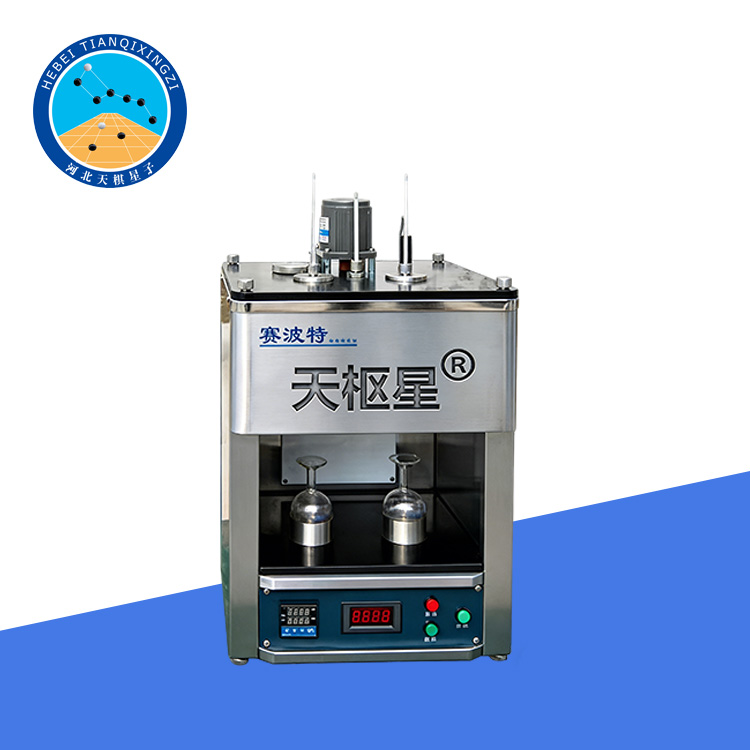
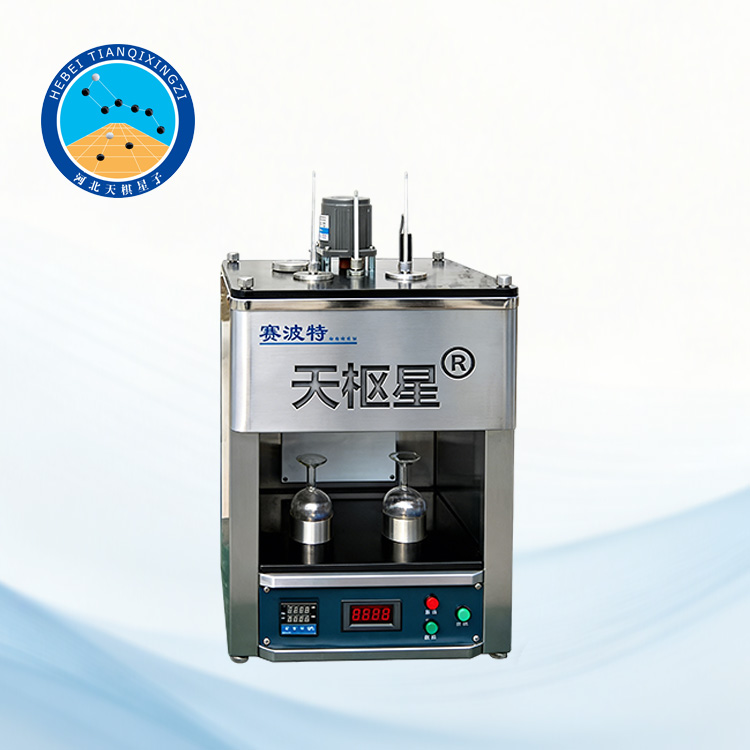
This asphalt saybolt viscometer is suitable for determining the conditional viscosity of materials such as viscous petroleum asphalt and liquid petroleum asphalt under high temperature conditions, and can be used to determine the construction temperature range of asphalt, providing a reliable basis for road engineering construction and quality control.
Asphalt Saybolt Viscometer
Model:TD623-2
I. Product Overview
The TD623-2 Asphalt Saybolt Viscometer is designed and manufactured by Hebei Tianqixingzi Inspection Equipment Co., Ltd. in accordance with the requirements of the national industry standard JTG 3410-2025 "Standard Test Methods of Asphalt and Asphalt Mixture for Highway Engineering" (T 0623-2025 Emulsified Asphalt Viscosity Test (Saybolt Heavy Oil Viscometer Method)), and references ASTM D88 and AASHTO T 72.
II. Structural Features
This instrument mainly consists of a bath, a bath temperature controller, and a parameter display and calculation unit (calibration coefficient, time, viscosity, etc.).
This instrument adopts microcomputer control technology and features dual-channel simultaneous detection, allowing for parallel testing of two samples simultaneously. The measured parameters are digitally displayed, and the arithmetic mean is automatically calculated. Furthermore, the instrument can instantly and automatically convert the measured Saybolt viscosity into Engela viscosity or kinematic viscosity, obtaining three viscosity data points in a single test. This results in high efficiency and reliable test data.
III. Technical Parameters
1. Power Supply: AC 220V±10% 50Hz;
2. Instrument Type: Benchtop;
3. Operating Mode: Dual-channel detection, parallel testing;
4. Sample Receiving Bottle Specification: 60±0.05ml;
5. Bath Heating Power: 1000W;
6. Bath operating temperature: Ambient temperature ~ 240.0℃;
7. Bath temperature control accuracy: ±0.1℃;
8. Test timing range: 0.0s ~ 999.9s;
9. Test timing accuracy: ±0.1s;
10. Ambient temperature: ≤35℃;
11. Relative humidity: ≤85%
IV. Test Methods and Procedures
1. Preparation
1.1 Clean and dry the sample container and flow orifice with solvents such as xylene.
1.2 Prepare the asphalt sample according to this specification T0602. Take approximately 450g of the sample in a container, heat it slowly while constantly stirring (stirring must not be stopped within the last 30℃), and heat it to 10-15℃ above the specified test temperature. The sample is only allowed to be heated and used once; repeated heating and testing are not permitted.
1.3 Heat the water or oil in the insulation tank and maintain the specified test temperature. If the temperature is higher than this, high-temperature resistant cylinder oil, heat transfer oil, or silicone oil must be used.
1.4 Viscometer Calibration: The viscometer must be recalibrated every 3 years. The calibration method is as follows:
2.2 Verify the viscosity measured by the Saybolt Furol viscometer at 50°C.
2.3 If the efflux time of the standard viscosity oil measured by the viscometer (not less than 90 s) differs from the standard efflux time specified in the instrument manual by more than 0.2%, the measured time shall be corrected using the calibration coefficient calculated according to Formula (T0623-1).When the deviation exceeds 1%, the instrument shall not be used.
F = ts / t (T0623-1)
Where:
F — calibration coefficient
ts — standard efflux time provided by the viscometer (s)
t — actual efflux time of the same standard viscosity oil at 50°C (s)
2. Test Procedure
2.1 Tightly plug the bottom cavity of the sample tube with a cork to a depth of 6.5~9.5mm. The cork should be tight enough to prevent the sample from flowing out of the flow hole, but also easy to pull out. Then, place the receiving bottle below the flow hole, with the flow hole facing the center of the receiving bottle.
2.2 Sieve the sample through a 0.15mm sieve and pour it into the sample collection tube. The quantity should be such that the liquid level reaches the mark on the sample collection tube. Then, cap the tube.
2.3 Stir the sample horizontally using a thermometer inserted into the tube, ensuring it does not touch the sample collection tube. Stir at a speed of 30-50 rpm until the sample reaches the specified test temperature ±0.1℃ and maintain this temperature for 1 minute.
2.4 Immediately remove the thermometer and cap, remove the cork blocking the bottom of the sample collection tube, and simultaneously start a stopwatch to allow the sample to flow into the receiving bottle. Stop the stopwatch when the sample reaches the 60mL mark on the receiving bottle, and record the time to an accuracy of 0.1s.
V. Calculation of Test Results
4.1The Saybolt viscosity of asphalt shall be calculated according to Formula (T0623-2):
vs = v1 × F (T0623-2)
Where:
vs — Saybolt viscosity of the sample (s)
v1 — measured viscosity of the sample (s)
F — calibration coefficient of the viscometer
4.2 The kinematic viscosity of petroleum asphalt under the same test temperature conditions can be calculated using formula (T0623-3).
ηs = 2.12 × vs (T0623-3)
Where: ηs—kinematic viscosity (mm²/s) under the measured temperature conditions.
4.3The Engler viscosity of emulsified asphalt at the same temperature can be converted according to Formula (T0623-4):
Ev = 0.280 × vs (T0623-4)
Where:
Ev — Engler viscosity under the test temperature conditions.
VI. Test Report
The same sample shall be tested in parallel at least twice. If the results of the two tests meet the allowable error requirements for repeatability testing, the average value shall be taken as the test result. For sample viscosity below 200 s, the accuracy shall be to 0.5 s; for viscosity above 200 s, the accuracy shall be to 1 s.
VII. Allowable Test Errors
The allowable error for repeatability testing is 4% of the average value, and the allowable error for reproducibility testing is 6% of the average value.
VIII. Complete Set of the Instrument
1.Saybolt Furol Viscometer
2.Sample receiving flask
3.Power cord (250 V, 6 A)
4.Stopper handle
5.Stopper
6. Mercury thermometer (0–50°C), graduation value 0.1°C
7. Mercury thermometer (0–300°C), graduation value 1°C
8. Glass tube thermometer stopper (silicone stopper No. 8)
9. Thermometer retaining ring (No. 1)
