


 Spanish
 Russian
 Arabic

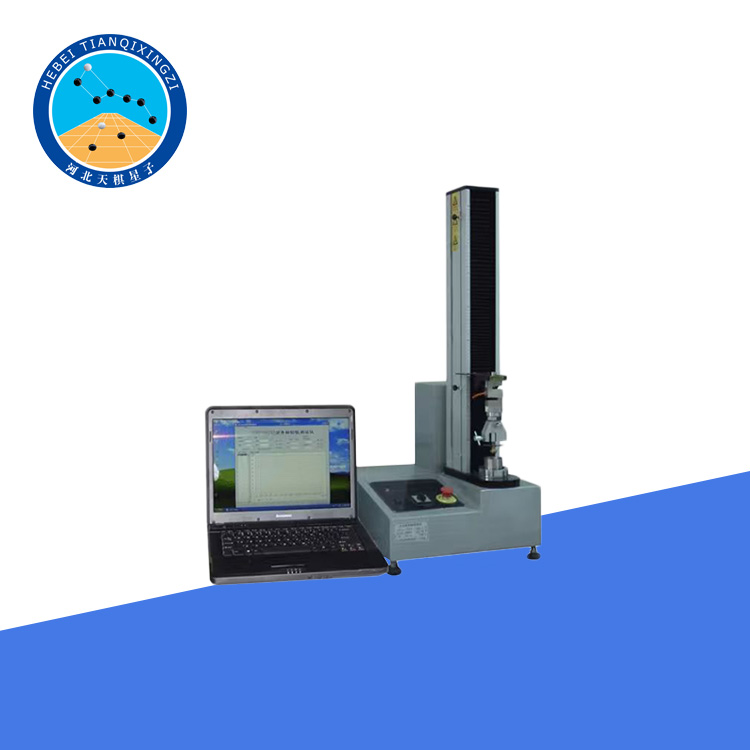

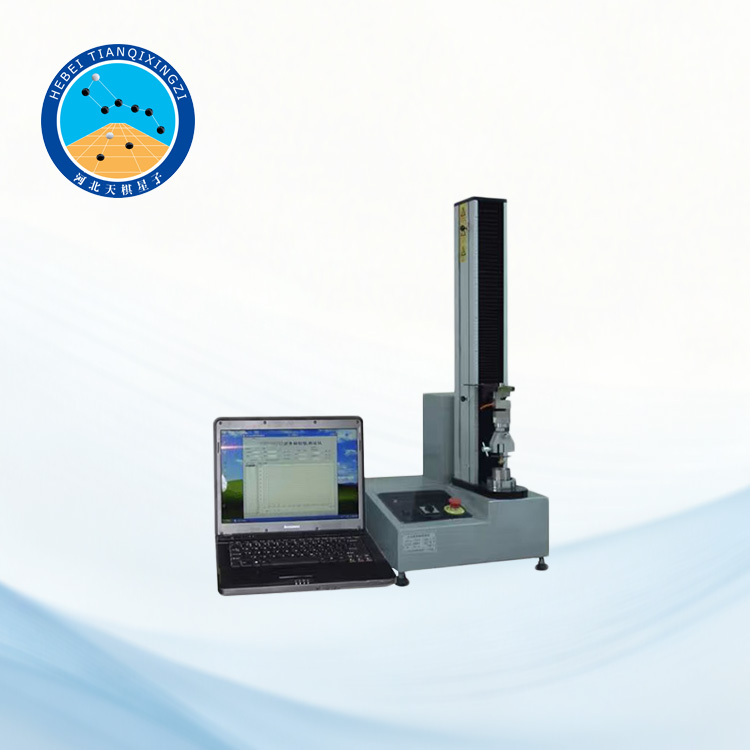
Products Description
The Asphalt Tackiness Tester measures the tackiness, adhesion, cohesion, and elastic recovery of asphalt and bitumen binders, helping evaluate material performance, workability, and quality consistency in road engineering, laboratory testing, and asphalt production.
Asphalt Adhesion and Cohesion Tester
Model:TD624-1
I. Overview of the TD624 Series Asphalt Viscosity and Toughness Tester
The TD624 series asphalt viscosity and toughness tester is designed and manufactured by Hebei Tianqixingzi Inspection Equipment Co., Ltd. in accordance with the requirements specified in the People's Republic of China transportation industry standard JTG 3410‑2025 "Standard Test Methods of Asphalt and Asphalt Mixture for Highway Engineering" specifically T0624‑2025 "Asphalt Viscosity and Toughness Test," and the petrochemical industry standard SH/T0735-2003 "Asphalt Viscosity and Toughness Test Method." It is used to test the viscosity and toughness of asphalt under specific conditions to evaluate the modification effect of asphalt after adding modifiers.
Reference Standards:
ASTM D5081
T0624-2011
SH/T0735-2003
II. Technical Parameters of TD624 Series Asphalt Ductility Tester
1. Tensile speed: (500mm ± 10mm)/min;
2. Maximum load capacity: 1000N;
3. Tensile force non-linearity error: <0.5%;
4. Tensile force sampling interval: 0.5mm;
5. Maximum stretching length: 610mm;
6. Power supply: AC (220±10%)V, 50Hz;
7. Overall power consumption: No more than 500W;
8. Dimensions: 560mm x 450mm x 1230mm (Length x Width x Height).
III. Structural Characteristics of the TD624 Series Asphalt Viscosity and Toughness Testers
(1) Instrument Composition
This instrument consists of a tackiness and ductility tester, a tensile testing machine, and a laptop computer. The tackiness and ductility tester comprises a hemispherical tensile head, a positioning nut, a positioning bracket, and a sample container. Its materials, structure, and specifications fully comply with the requirements of standards T0624-2025 "Asphalt Tackiness and Ductility Test" and SH/T0735-2003 "Asphalt Tackiness and Ductility Test Method".The tensile testing machine is equipped with upper and lower clamps for fixing the tackiness and ductility tester, and can perform constant-speed tensile testing at a speed of 500 mm/min, with a maximum tensile length of 610 mm. The PC uses testing and analysis software independently developed by our company to achieve intelligent and automated testing.
(2) Main Performance Characteristics
1. This instrument is compatible with the requirements of two testing standards in the transportation and petrochemical industries. The tensile length can be selected as 300mm or 610mm; the tensile testing machine adopts a double-screw design, ensuring stable and reliable operation and high measurement accuracy.
2. The independently developed testing software can automatically plot and print the "Adhesion and Toughness Test Load-Deformation Curve" and automatically calculate the adhesion and toughness of asphalt. For studying unusual "Adhesion and Toughness Test Load-Deformation Curves," it also allows researchers to reasonably modify the toughness tangent line.
3. The upward stretching, downward positioning, stopping of upward or downward movement, and calculation of test results of this instrument can all be completed through a laptop computer, making it convenient to use.
4. The control panel has a simple design, and the test can also be easily operated using the up, down, and stop buttons on the panel. The laptop computer automatically calculates the test results.
5. Equipped with an A4 printer, it can automatically plot and print the "Adhesion and Toughness Test Load-Deformation Curve" and the adhesion and toughness values of asphalt.
6. The instrument features advanced design, meticulous craftsmanship, and an elegant appearance. It is easy to operate and possesses the sophisticated qualities of a high-end instrument, making it an ideal choice for relevant construction, supervision, research units, and universities.
IV. Instrument Maintenance and Troubleshooting
(1) Instrument Maintenance
1. The instrument should be placed in a well-ventilated and dry place to prevent moisture damage and ensure that the internal insulation of the instrument is in good condition (if it encounters humid weather or rain, a hairdryer can be used to dry the moisture inside the instrument before use).
2. After the test, the test equipment should be cleaned and dried according to the test procedures, and the transmission device should be lubricated promptly.
3. Back up the measurement data using a floppy disk.
4. Do not use the computer for other purposes.
5. Do not modify the basic settings of the computer software without authorization.
6. Avoid computer system failures caused by human factors.
(2) Common Troubleshooting
1. Failure to start
Reasons: a. No power in the power circuit; b. Blown fuse.
Solutions: a. Connect the power supply; b. Replace the fuse.
2. Electrified casing
Reason: Poor grounding of the instrument.
Solution: Check the grounding wire of the power supply and the grounding terminal of the instrument casing.
Note: All the above operations should be performed under the guidance of professional maintenance personnel.
