


 Spanish
 Russian
 Arabic

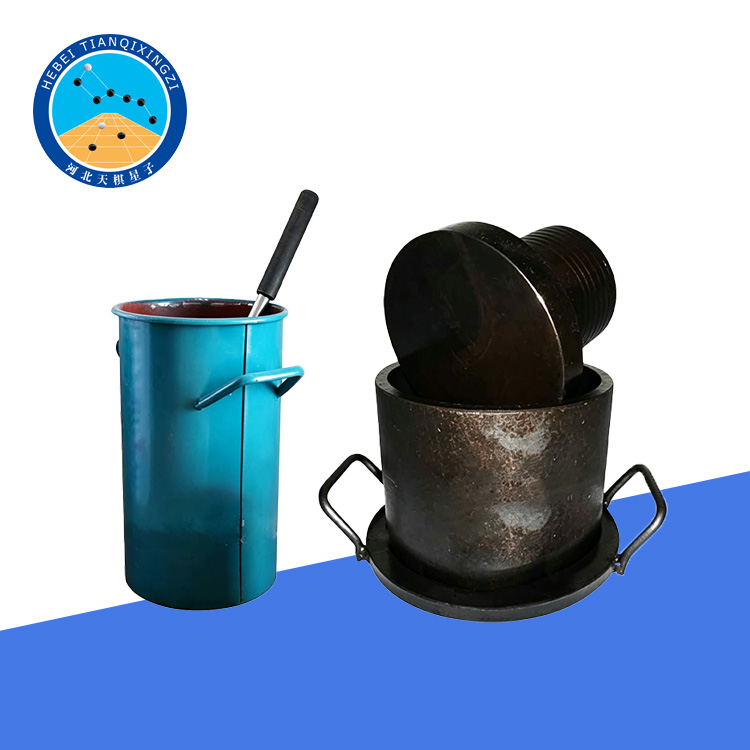

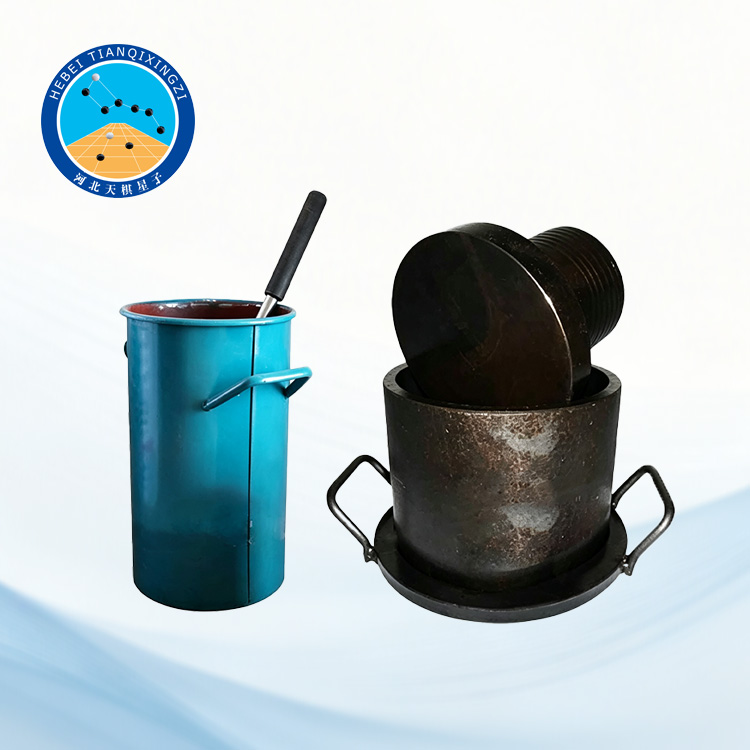
Products Description
This apparatus is used for the aggregate crushing value (ACV) test to determine the ability of coarse aggregates to resist crushing under a gradually applied compressive load. The test provides an important indicator of the mechanical properties of aggregates and is widely used to evaluate their suitability for highway engineering and other construction applications.
Coarse Aggregate Crushing Value Test Apparatus
Model:TD316-1
I. Product Overview
The Coarse Aggregate Crushing Value Test Apparatus is designed and manufactured in accordance with T0316—2005 "Coarse Aggregate Crushing Value Test" specified in JTG E42-2005 Test Methods of Aggregate for Highway Engineering. It is used to determine the crushing value of coarse aggregates and evaluate their resistance to compressive crushing, providing an important basis for assessing aggregate quality in highway engineering and construction projects.
II. Reference / Applicable Standards
JTG E42-2005 — Test Methods of Aggregate for Highway Engineering (T0316)
BS 812-110:1990 — Testing Aggregates – Methods for Determination of Aggregate Crushing Value (ACV)
IS 2386 (Part IV) — Methods of Test for Aggregates for Concrete – Mechanical Properties
AS 1141.21 — Methods for Sampling and Testing Aggregates – Determination of Aggregate Crushing Value
III. Technical Specifications
1. Test Cylinder Inner Diameter: 150 ± 0.3 mm
2. Test Cylinder Height: 125–128 mm
3. Test Cylinder Wall Thickness: ≥ 12 mm
4. Plunger Diameter: 149 ± 0.2 mm
5. Plunger Shaft Diameter: 100–149 mm
6. Total Length of Plunger: 100–110 mm
7. Plunger Thickness: ≥ 25 mm
8. Base Plate Diameter: 200–220 mm
9. Base Plate Thickness (Center Section): 6.4 ± 0.2 mm
10. Base Plate Edge Thickness: 10 ± 0.2 mm
11. Material: Cast Steel or Solid Steel
IV. Test Preparation
1. Sample Preparation
Sieve the air-dried aggregate using 13.2 mm and 9.5 mm standard sieves, and retain the aggregate passing the 13.2 mm sieve and retained on the 9.5 mm sieve. Prepare three test samples, each weighing 3,000 g, for the crushing value test.
If the aggregate is excessively moist, it may be oven-dried at a temperature not exceeding 100°C for no longer than 4 hours. Before testing, allow the samples to cool naturally to room temperature.
2. Sample Quantity
For each test, the quantity of aggregate shall be sufficient so that, after compaction, the depth of the aggregate in the test cylinder is 100 mm.
3. Determination of Sample Quantity
Determine the required quantity of aggregate to be placed in the test cylinder using the following procedure.
4. Filling and Compaction of the Test Sample
Divide the test sample into three approximately equal portions and place them into the test cylinder in three successive layers. After adding each layer, level the surface and compact the aggregate by applying 25 evenly distributed tamps using the hemispherical end of the tamping rod.
After the final layer has been compacted, carefully level the surface with the tamping rod used as a straightedge. Weigh the aggregate contained in the test cylinder and record its mass as m₀.
A parallel test shall be carried out using another sample of the same mass to ensure the reliability and repeatability of the test results.
V. Test Procedure
1. Place the test cylinder on the base plate.
2. Divide the required mass of the sample into three portions (each approximately the same quantity) and evenly fill the mold. Each time, level the sample surface and tamp it evenly 25 times using the hemispherical end of a metal rod. Finally, use the metal rod as a straight scraper to carefully level the surface.
3. Loading the Test Specimen
Place the test cylinder containing the aggregate sample on the compression testing machine, then carefully position the plunger on top of the aggregate surface inside the test cylinder. Ensure that the plunger is level and properly centered, and avoid any contact or wedging against the inner wall of the test cylinder.
4. Applying the Load
Start the compression testing machine and apply the load uniformly. Increase the load gradually until a total load of 400 kN is reached in approximately 10 minutes. Maintain the maximum load for 5 seconds, and then release the load gradually.
5. Removing the Specimen
Remove the test cylinder from the compression testing machine and carefully take out the tested aggregate sample.
6. Sieving the Crushed Sample
Sieve the entire crushed aggregate sample using a 2.36 mm standard sieve. The sample may be sieved in several portions if necessary. Continue sieving until no significant amount of material passes through the sieve within 1 minute.
7. Weighing the Fine Material
Collect and weigh all the material passing the 2.36 mm sieve, and record the mass as m₁, accurate to 1 g.
VI. Product Maintenance and Precautions
1) When using the aggregate crushing value apparatus, always ensure that the base plate, test cylinder, and plunger are correctly positioned and properly aligned. Incorrect installation or placement may easily damage the aggregate crushing value apparatus and, in some cases, may even cause damage to the compression testing machine. Our company has encountered such situations before; therefore, users are strongly advised to operate the equipment carefully. Any equipment damage or personal injury resulting from improper operation is not covered by our after-sales service.
2) For interns or newly employed testing personnel, it is recommended that the first test operation should always be performed under the guidance of an experienced technician or laboratory supervisor.
3) After completing the test, clean all residual materials from the testing equipment using a clean brush. Apply anti-rust grease to all parts of the aggregate crushing value apparatus for proper protection and long-term storage.
VII. Instruments and Equipment Used with This Equipment
1. TDDB10-450 Metal Rod: Diameter 10 mm, Length 450 mm.
2. TD5000 Balance: 5 kg, Sensitivity: 1 g.
3. One each of TD300S-13.2/9.5/2.36 standard test sieves;
4. One TDYE-200 series pressure testing machine or TDWE-60 series universal testing machine;
5. One TD316-R type standard measuring cylinder (Inner diameter 112.0 mm, Height 179.4 mm, Volume 1767 cm³).
