


 Spanish
 Russian
 Arabic


Products Description
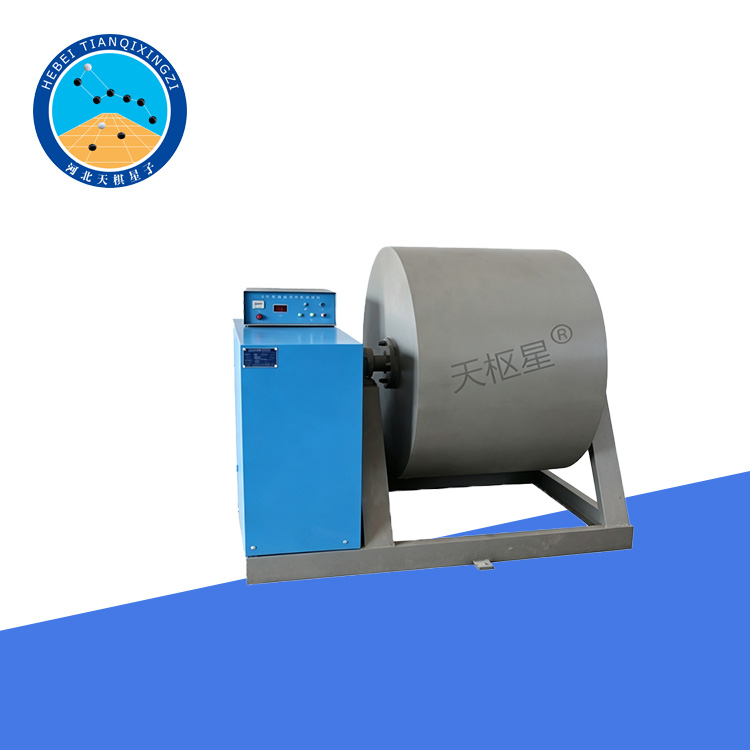
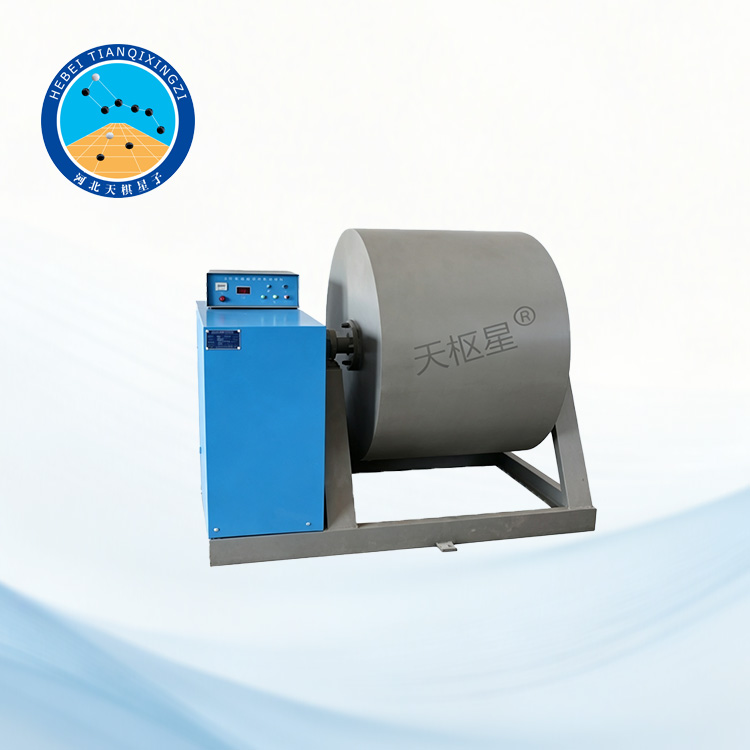
The Los Angeles Abrasion Testing Machine is designed to evaluate the abrasion resistance, impact resistance, and durability of coarse aggregates, crushed stone, and railway ballast. By simulating repeated impact and grinding actions, it accurately measures aggregate degradation performance and abrasion loss. This reliable aggregate testing equipment is widely used in highway engineering, construction material laboratories, and quality control applications.
Los Angeles Abrasion Testing Machine for Aggregate Testing
Model:TD0317-1
I. Product Application
The Los Angeles Abrasion Testing Machine is designed and manufactured by our company in accordance with JJG 108-2012 Verification Regulation of Los Angeles Abrasion Testing Machines. It is developed based on the requirements of JTG E42-2005 Test Methods of Aggregate for Highway Engineering, with reference to TB/T 2328.1-2008 Test Methods for Railway Ballast and other relevant aggregate testing methods. The machine is primarily used to determine the abrasion resistance (Los Angeles abrasion value) of coarse aggregates, crushed stone, and railway ballast by measuring their resistance to abrasion and impact.
Applicable / Reference Standards: ASTM C131/C131M, ASTM C535, AASHTO T96, EN 1097-2, BS EN 1097-2, AS 1141.23, IS 2386 (Part IV)
II. Instrument Structure
The machine mainly consists of the following components: rotating drum, shelf plate (internal baffle), sealing cover, gearbox, motor, counter, and other parts.
III. Technical Specifications
1. Drum Internal Diameter × Internal Length: 710 mm × 510 mm (±5 mm)
2. Rotating Speed: 30–33 rpm
3. Counter: 4 digits
4. Overall Dimensions: 1100 × 780 × 1000 mm (L × W × H)
5. Steel Balls (Grinding Charge): Φ47.6 mm (8 pcs); Φ45 mm (3 pcs); Φ44.5 mm (1 pc)
Total Weight: 5000 g ± 25 g
IV. Operating Procedure
1. Before the test, check that the electrical wiring is in good condition. The input power supply must be a three-phase power supply. Press the jog button to check whether the drum rotates properly. The drum should rotate in the direction indicated by the arrow on the drum. If the rotation direction is opposite, exchange any two of the three phase wires of the 380 V power supply to change the rotation direction.
At the same time, reset the LED display to zero, and set the preset counter to the required number of revolutions. Press the Start button to begin operation. In case of any abnormal situation, press the Pause button to stop the machine. After troubleshooting, press the Start button again to resume operation.
2. Place the aggregate sample and steel balls into the drum. Close the sealing cover and tighten the screws. Start the instrument and allow it to rotate for 500 or 1000 revolutions, after which it will automatically stop. At this point, the discharge opening will be positioned at the upper-middle position, allowing the sealing cover to be opened easily. After opening the cover, press the jog button to rotate the discharge opening downward. Release the button to stop the drum, then remove the test sample.
3. Use a 2 mm round-hole sieve or a 1.7 mm square-hole sieve to remove fine particles from the test sample. Wash the retained crushed aggregate on the sieve with water, then dry it in an oven to a constant mass. Accurately weigh the sample mass for calculation.
V. Calculation Method
Calculate the abrasion loss value of the aggregate according to the following formula, with the result accurate to 0.1%.
Qabr = (G₁ − G₂) / G₁ × 100%
Where:
Qₐᵦᵣ — Abrasion loss value of the aggregate (%);
G₁ — Original mass of the aggregate sample placed into the drum (g);
G₂ — Mass of the sample after the test, washed clean and oven-dried to constant mass (g).
2. The test result shall be calculated as the average value of two tests. The difference between the two test results shall not exceed 2%; otherwise, the test shall be repeated.
VI. Random Accessories
1. Instruction Manual (1 copy)
2. Certificate of Conformity (1 copy)
3. Test Steel Balls (1 set)
4. Controller (1 unit)
Note: Items 1, 2, and 3 should be placed inside the test cylinder.
