


 Spanish
 Russian
 Arabic


Products Description
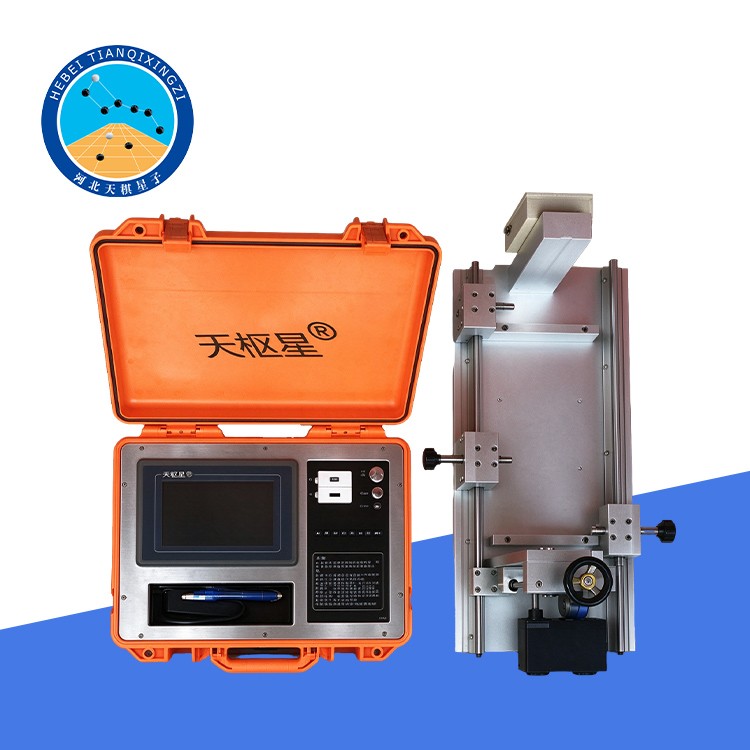
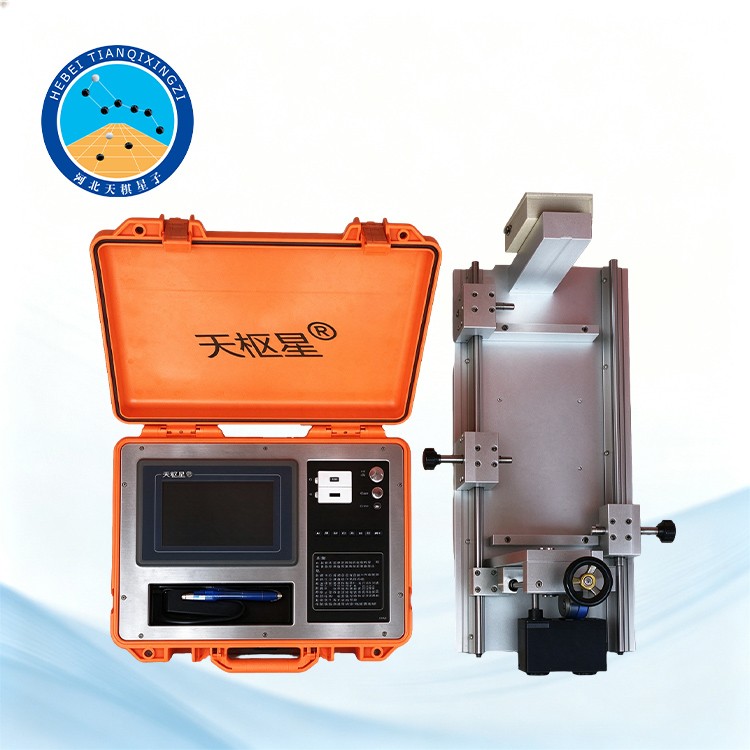
The Automatic Concrete Shrinkage Tester (Contact Method) measures dimensional changes in concrete, cement mortar, and masonry specimens over a specified period. By continuously monitoring changes in specimen length, the instrument automatically records shrinkage and expansion data for subsequent analysis.
Automatic Concrete Shrinkage Tester (Contact Method)
Model: TD574-2
I. Product Overview
During the hardening process of concrete, volume changes may occur. When concrete hardens in air, it generally undergoes shrinkage, except in the case of expansive cement. When concrete hardens in water, its volume generally remains stable or exhibits only slight expansion. This instrument is designed to measure the shrinkage and expansion of concrete specimens and is suitable for construction research institutions, design departments, laboratories, and construction companies.
This model of shrinkage and expansion tester is equipped with a high-speed ARM microprocessor and an embedded real-time operating system (RTOS). It features comprehensive software functions and a 7-inch full-color touchscreen with a Chinese-language interface, making both system setup and testing operations easy to learn and perform.
Intelligent microcomputer control enables automated operation, offering convenient use, high measurement accuracy, stable performance, reliable operation, and an attractive design.
The instrument is primarily used for the automatic recording of shrinkage, expansion, and other related parameters of concrete, mortar, and masonry brick specimens. It has a built-in lithium battery for convenient portable use and can test 3 to 16 specimens simultaneously.
The instrument can store data from five consecutive test runs. Each test cycle lasts 14 days, with 16 channels available and data recorded every 10 minutes for each channel. Once the storage capacity is exceeded, the oldest test data will be overwritten by new data.
II. Product Features
1. A newly designed probe alignment mechanism enables simultaneous adjustment across three axes, ensuring precise measurement of the test specimen.
2. Users can select the number of channels according to their requirements, with up to 16 channels capable of operating simultaneously. The touchscreen displays real-time data for up to 16 channels, while a high-precision temperature and humidity sensor monitors and displays current environmental parameters.
3. The controller can operate independently or be connected to a PC running dedicated software. The PC software enables real-time control of the testing process and displays relevant test data. It provides precise control over the test procedure and allows users to monitor test data clearly and intuitively. The controller automatically preserves test data in the event of a power failure. Users can retrieve historical data at any time and export the data to a computer.
4. The main controller is equipped with a high-capacity lithium battery pack, allowing continuous operation for at least 20 hours without an external power supply. This helps prevent unexpected power outages from interrupting the testing process.
5. Independent data acquisition units collect data from each channel; the system utilizes RS-485 communication—renowned for its high transmission reliability—ensuring accurate and rapid data transfer.
III. Technical Specifications
1. Measuring Range: 530–548 mm (standard configuration)
2. Standard Configuration: Suitable for measuring concrete specimens measuring 100 × 100 × 515 mm.
3. Optional Molds: Molds suitable for measuring concrete specimens measuring 150 × 150 × 515 mm or 200 × 200 × 515 mm are available as optional accessories.
4. Standard rod length: 540 ± 0.2 mm
5. Dial indicator range: 0–12.500 mm
6. Overall dimensions: 720 × 400 × 300 mm (single channel)
7. Power supply voltage: AC 220 V / 50 Hz
8. Total power: 50 W
9. Total weight: 300 kg (including 16 sets of measuring devices and test molds)
100 kg (including 3-channel measuring devices and test molds)
IV. Key Advantages
1. Automatic Data Acquisition: Automatically records specimen length changes at preset intervals, reducing the need for manual readings.
2. Multi-Channel Testing: Supports simultaneous monitoring of up to 16 specimens, improving laboratory testing efficiency.
3. Real-Time Data Monitoring: Displays measurement results and environmental temperature and humidity information on the touchscreen.
4. Data Storage and Export: Preserves historical test records and supports data export to a PC for further analysis and reporting.
5. Portable Operation: The built-in lithium battery supports extended operation without an external power supply.
6. Reliable Data Transmission: RS-485 communication supports stable data transfer between the measurement units and the main controller.
V. Applications
The Automatic Concrete Shrinkage Tester is suitable for various construction materials testing and research applications, including:
Concrete Shrinkage Testing: Monitoring length changes in concrete specimens during hardening and curing.
Cement Mortar Shrinkage Testing: Evaluating dimensional changes in cement-based mortar materials.
Concrete Expansion Measurement: Investigating expansion behavior under specified curing conditions.
Masonry Material Testing: Monitoring dimensional changes in suitable masonry brick specimens.
Construction Materials Research: Comparing the shrinkage and expansion characteristics of different material formulations.
Quality Control and Laboratory Testing: Supporting long-term monitoring and comparative evaluation of construction materials.
VI. Why Is Concrete Shrinkage Testing Important?
Concrete shrinkage occurs when concrete loses moisture or undergoes internal volume changes during hydration and hardening. If shrinkage is restrained, tensile stresses may develop and contribute to cracking. Expansion can also occur under certain material compositions and curing conditions.
Monitoring dimensional changes helps engineers and researchers evaluate the dimensional stability of cement-based materials, investigate potential cracking risks, and compare the performance of different concrete mixtures.
An automatic concrete shrinkage measuring instrument provides continuous measurement records, helping laboratories identify changes over time and analyze material behavior more efficiently than relying solely on manual measurements.
