


 Spanish
 Russian
 Arabic


Products Description
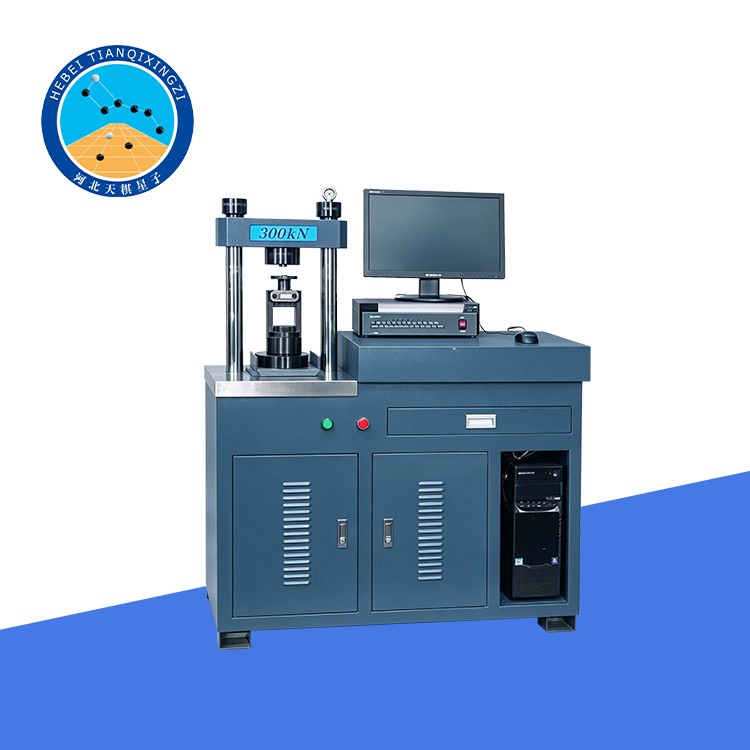
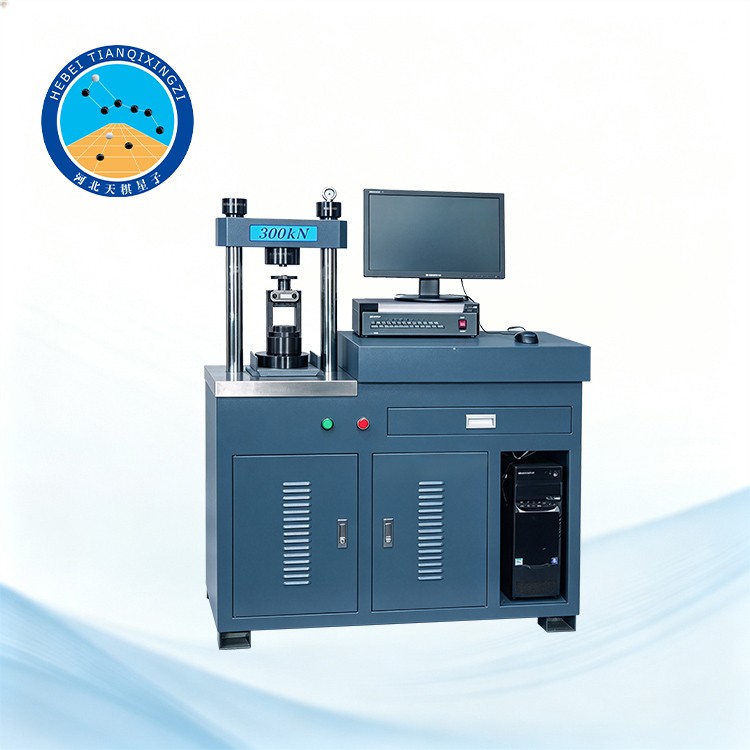
The Computer-Display Concrete Compression Testing Machine is designed for determining the compressive strength of concrete and other building materials. It uses hydraulic loading with computer-based data acquisition and display, providing clear test results for laboratory testing, quality control, and construction material research.
Computer-Display Concrete Compression Testing Machine
Model: TD3159-1000B
I. Product Introduction
The Concrete Compression Testing Machine consists of an upper beam, columns, an adjustment screw and handwheel, compression platens, a hydraulic cylinder, and a piston. A spherical seating assembly is installed between the end of the adjustment screw and the upper compression platen. During operation, when the bottom surface of the upper platen comes into contact with the top surface of the concrete specimen, the spherical seating assembly automatically accommodates slight inclinations in the specimen height direction, ensuring full contact between the two surfaces and uniform load distribution over the specimen.
Reference Standards: EN 12390-4, ASTM C39, AASHTO T 22, IS 14858:2000
II. Operating Procedures
1. Connect the power cord, select the appropriate gear, and press the "Set" button to configure system settings; if no adjustments are required, proceed directly to the next step.
2. Press the "Reset" button to clear the reading, place the test specimen in the center, and then turn the handwheel to adjust the lead screw until the upper pressure plate is approximately 5 mm above the specimen. Press the "Start" button to start the motor (the red indicator light should turn on; if it does not, the loading rate will not be displayed, and test data cannot be saved or printed).
3. Close the oil return valve, slowly open the oil supply valve, and control the loading rate as required until the specimen fails.
4. Open the oil return valve and close the oil supply valve. Remove the broken pieces of the specimen. Repeat the same procedure to place the second and third specimens.
5. Open the oil return valve to release the load. Press the “Print” button to print all test results and data. When the test is completed, press the “Stop” button to stop the motor and then switch off the power supply.
6. When testing specimens of the same size, do not turn the handwheel. Allow the piston to return freely. This helps ensure test accuracy while saving testing time.
7. If the piston exceeds the maximum travel limit (approximately 20 mm), the proximity switch will trigger a protective stop; in this event, open the oil return valve handle to lower the piston, then restart the test.
8. If an abnormality occurs in the control system during operation, turn off the power switch immediately.
9. The casing of the testing machine must be securely grounded.
III. Maintenance and Care
1. Maintaining the level of the testing machine: Certain factors may disrupt the machine's level; therefore, the level should be checked periodically. If the deviation exceeds the specified range, the machine must be re-leveled.
2. The cement and concrete compression testing machine should be kept clean; after wiping down unpainted surfaces, apply a thin layer of anti-rust oil.
3. The piston of the cement and concrete compression testing machine must not rise beyond the specified limit.
IV. Applications
The Computer-Display Concrete Compression Testing Machine is designed for determining the compressive strength of concrete specimens and is suitable for routine testing in construction material laboratories. It can be used for quality control, material inspection, research and development, and concrete strength evaluation in civil engineering and construction projects.
The machine is suitable for testing concrete specimens of different sizes and configurations when equipped with the appropriate compression platens or accessories. It is particularly useful for concrete cube and cylinder compression testing in laboratories, testing centers, construction companies, universities, and research institutions.
V. Key Features
1. Hydraulic loading system provides stable and controlled force application during compression testing.
2. Spherical seating assembly helps accommodate slight specimen inclinations and promotes uniform load distribution.
3. Computer-based data acquisition and display make test results easy to monitor and record.
4. Clear digital test information helps operators evaluate the maximum load and concrete compressive strength.
5. Rigid loading structure provides stable support during specimen testing.
6. Piston limit protection helps prevent excessive piston travel during operation.
7. Suitable for routine concrete compression testing, quality control, and laboratory research.
VI. Data Recording and Test Results
The computer-based display system allows operators to monitor test data during the compression test and record the required test results. Test data can be printed after completion of the test, providing a convenient record for laboratory documentation, quality control, and material testing reports.
For laboratories performing repeated concrete compression tests, the system helps simplify routine operation and improve the efficiency of test data recording and reporting.
