


 Spanish
 Russian
 Arabic


Products Description
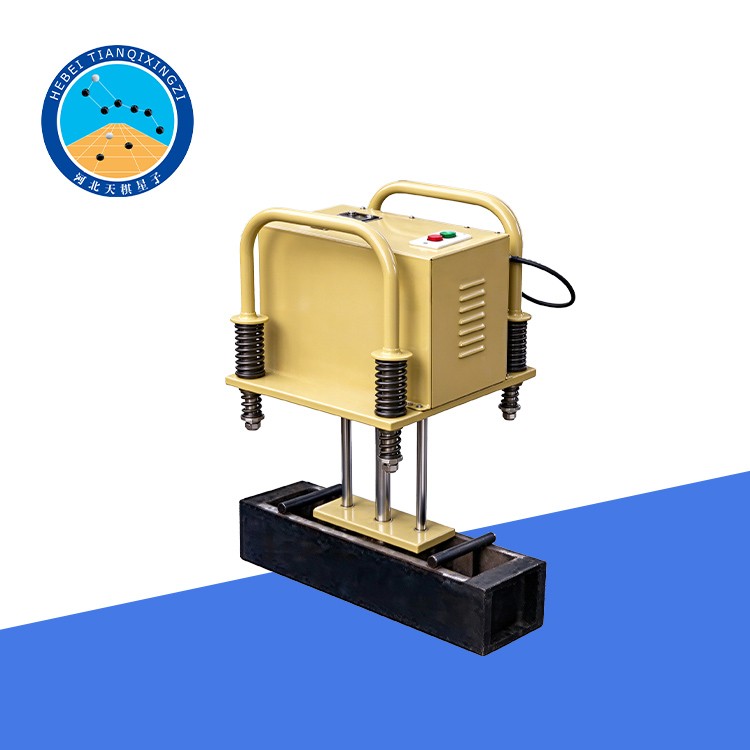
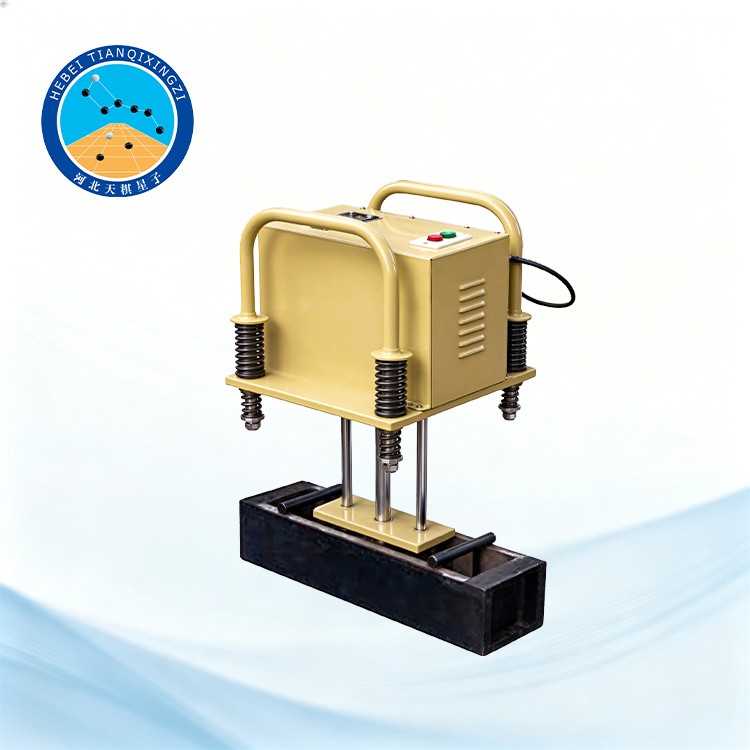
The RCC Specimen Compaction Apparatus is designed for preparing and compacting roller-compacted concrete (RCC) flexural specimens in laboratory testing. It provides stable and effective compaction to help produce uniform RCC test specimens for concrete material testing, quality control, and research applications.
RCC Specimen Compaction Apparatus
Model: TD552-1
I. Product Overview
The RCC Specimen Compaction Apparatus (also known as a Roller-Compacted Concrete (RCC) Flexural Specimen Preparation Apparatus) is developed and manufactured by our company in accordance with JTG E30-2005, Test Methods of Cement and Concrete for Highway Engineering, specifically T0552-2005, Standard Practice for Making Roller-Compacted Concrete Specimens in the Laboratory. The apparatus has undergone multiple improvements to enhance its performance and reliability.
It features reliable quality, stable performance, and is designed for the preparation and compaction of roller-compacted concrete (RCC) flexural specimens in laboratory testing.
II. Technical Specifications
1. Frequency: 50Hz ± 3Hz
2. Amplitude: 1mm
3. Power: 1.1kW
4. Weight: 25kg
5. Mold dimensions:
100 × 100 × 400 (one unit)
100 × 150 × 550 (one unit)
100 × 150 × 600 (one unit)
6. Pressure plate dimensions:
95 × 395 (one unit)
145 × 545 (one unit)
145 × 595 (one unit)
7. Voltage: 380V (3-wire)
III. Operating Procedure
1. Check the RCC Specimen Compaction Apparatus and other testing equipment to ensure that they are in good working condition.
2. Check the mould for any deformation and ensure that it can be securely assembled. Clean the mould and cover mould, apply a thin layer of mineral oil to the inner walls, and securely fasten the cover mould to the specimen mould.
3. Calculate the required mass of the sample for preparing one specimen based on the theoretical density of roller-compacted concrete and the internal volume of the specimen mould, using a compaction rate of 95%.
4. Weigh a representative roller-compacted concrete sample according to the required quantity. Divide the sample into two layers and place them into the specimen mould. During filling, take care to prevent segregation of the sample.
After each layer of sample is placed into the mould, first use a trowel to work the material up and down along the inner wall of the mould for one complete round, and then compact it with a tamping rod. For a 100 × 100 × 400 mm specimen, tamp each layer 50 times. For a 150 × 150 × 550 mm or 150 × 150 × 600 mm specimen, tamp each layer 100 times.
Tamping shall be carried out evenly in a spiral direction from the edges toward the center. When tamping the lower layer, the tamping rod shall reach the bottom of the mould. When tamping the upper layer, the rod shall penetrate approximately 20 mm into the lower layer. Tamping shall be performed evenly and gently, without impact.
Place the press plate on the surface of the sample, and place the RCC Specimen Compaction Apparatus on top of the press plate. Switch on the vibrator and continue vibrating until the sample surface is level with the top edge of the mould.
Remove the press plate and cover mould, and use a trowel to smooth the surface of the specimen.
IV. Equipment Maintenance
1. After the specimens are prepared, transfer them—along with the molds—to the curing room for curing.
2. Disassemble the mold assembly and pressure plate, clean and dry them, and then apply grease to prevent rusting.
V. Compaction Verification
Before conducting the strength test, measure the dimensions of the prepared specimen using a vernier caliper. Measure the height and width at least three points and take the average value, while measuring the length at least two points and taking the average value. Calculate the specimen volume based on the average dimensions and then weigh the specimen to determine its actual compaction percentage.
The actual compaction percentage should be compared with the designed compaction percentage of 95%. If the deviation exceeds 1%, the sample quantity or preparation process should be appropriately adjusted to ensure that the required compaction level is achieved.
VI. Product Features
Designed specifically for roller-compacted concrete (RCC) specimen preparation.
Suitable for preparing RCC flexural specimens of different dimensions.
Stable vibration frequency and amplitude for consistent compaction.
Robust construction for reliable laboratory operation.
Easy to operate, maintain, and clean.
Helps improve the uniformity and repeatability of RCC specimen preparation.
