


 Spanish
 Russian
 Arabic


Products Description
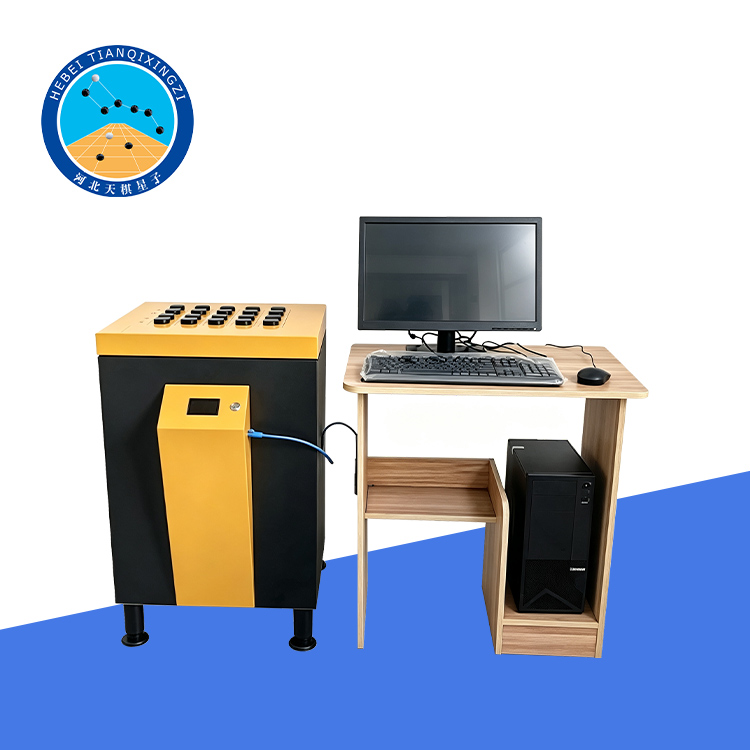
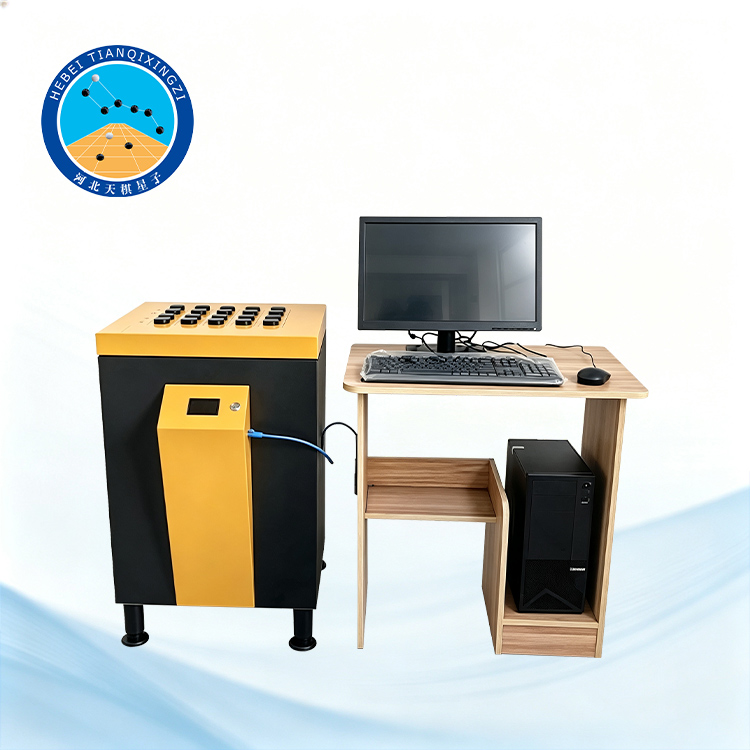
The Isothermal Calorimeter for Cement Heat of Hydration Testing is designed to measure and analyze the heat evolution and hydration process of cement and cementitious materials. Using isothermal conduction calorimetry, it continuously records heat flow and provides detailed hydration heat curves over time, making it ideal for cement research, concrete mix design, and the evaluation of mass and crack-resistant concrete.
Isothermal Calorimeter for Cement Heat of Hydration Testing
Model: TD12595-A
I. Product Introduction
The isothermal conduction calorimetry method can comprehensively characterize the hydration process of cement paste over a specified curing period and provide a heat flow rate curve showing the development of cement hydration heat with age. It is particularly suitable for accurately determining the characteristics of cement hydration heat within the first 24 hours. The instrument is mainly used for the study and evaluation of hydration heat in mass concrete for water conservancy and hydropower projects, crack-resistant concrete for railway and highway engineering, crack-resistant concrete for nuclear power plants, marine engineering concrete, and foundation concrete for high-rise buildings.
Applicable Standards: GB/T 12959-2024, ASTM C1702-26, ASTM C1679
II. Product Features
1. Intelligent: Single sample preparation takes only 2 minutes; data is automatically collected, requiring no manual monitoring.
2. Green: No harmful gases or liquids are emitted.
3. Complete Data Acquisition: Can fully describe the hydration process of cement paste within a defined age.
4. High Accuracy of Measurement Results: Temperature control ±0.02℃
III. Technical Specifications
1. Number of Channels: 4 / 8 / 12
2. Sample Capacity: 20 mL
3. Temperature Control Range: 5–90°C
4. Temperature Control Method: Air circulation
5. Temperature Control Accuracy: ±0.02°C
6. Detection Limit: 4 μW
7. Accuracy: ±20 μW
8. 1-Day Baseline Drift: <20 μW
9. 1-Day Baseline Noise: <±10 μW
IV. Working Principle
The Isothermal Calorimeter measures the heat released during cement hydration under controlled isothermal conditions. After the cement sample is mixed with water, the hydration reaction begins and releases heat. The calorimeter continuously detects the heat flow generated by the sample and converts the signal into hydration heat and heat flow data.
The test provides a continuous heat flow curve throughout the hydration process, allowing users to identify key hydration stages such as the initial reaction, induction period, acceleration period, deceleration period, and later hydration stage. This makes the instrument suitable for both hydration heat measurement and cement hydration kinetics analysis.
V. Test Results and Data Analysis
The system continuously records test data and generates heat flow curves as a function of time. The resulting curves can be used to evaluate the hydration rate, peak heat flow, time to peak heat flow, cumulative heat release, and hydration behavior of cementitious materials.
The test data can help researchers compare different cement types, mineral admixtures, supplementary cementitious materials, chemical admixtures, and cement-based formulations. It also provides useful information for optimizing concrete mix proportions and controlling early-age temperature rise.
VI. Wide Range of Applications
The Isothermal Calorimeter is suitable for cement manufacturers, concrete laboratories, research institutes, universities, construction companies, and quality control laboratories. Typical applications include:
Cement hydration heat testing and research;
Cement and cementitious material hydration kinetics analysis;
Concrete mix design and optimization;
Evaluation of supplementary cementitious materials and mineral admixtures;
Research on low-heat and mass concrete;
Crack-resistant concrete research;
Early-age hydration behavior of cement-based materials;
Comparative evaluation of different cement formulations.
It is particularly suitable for hydration heat studies related to mass concrete in water conservancy and hydropower projects, railway and highway engineering, nuclear power plants, marine structures, and high-rise building foundations.
