


 Spanish
 Russian
 Arabic


Products Description
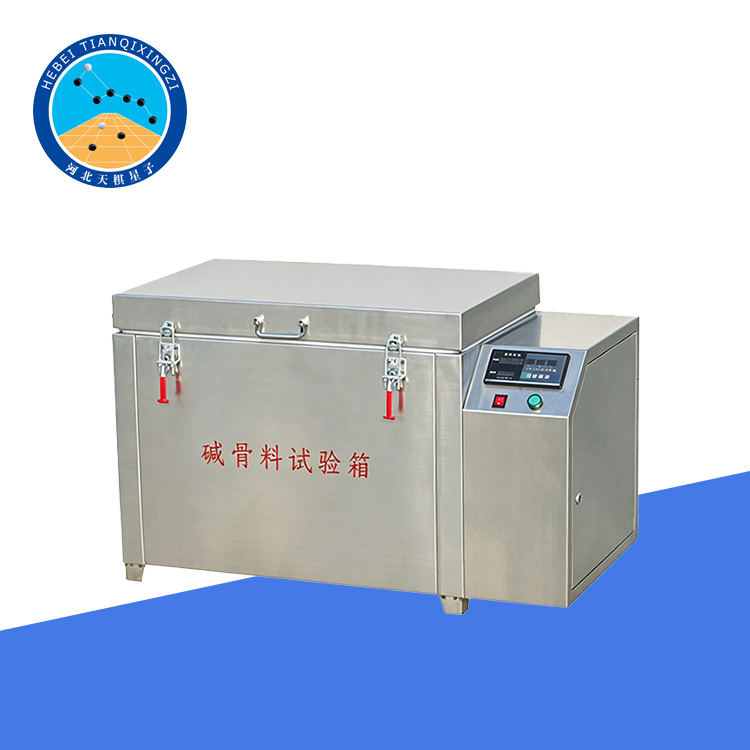
The equipment is mainly used to evaluate the alkali reactivity of aggregates, including Alkali-Silica Reaction (ASR) and Alkali-Carbonate Reaction (ACR). It is widely applied in concrete durability research, construction materials testing, highway engineering (JTG E42-2005), railway engineering (TB/T 3275-2018), and related fields.
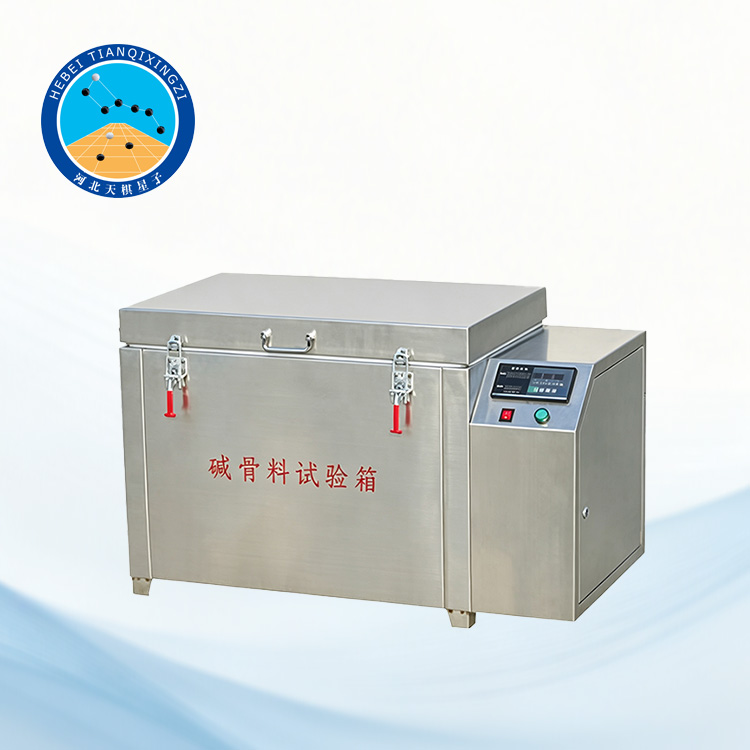
Alkali-Aggregate Reaction (AAR) Test Chamber
Model:TD325-2
I. Product Overview
The Alkali-Aggregate Reaction (AAR) Test Chamber is a specialized testing equipment designed in accordance with domestic and international standards, including GB/T 50082-2024 Standard for Test Methods of Long-Term Performance and Durability of Ordinary Concrete, GB/T 50733-2011 Technical Specification for Preventing Concrete Alkali-Aggregate Reaction, ASTM C1260 Standard Test Method for Potential Alkali Reactivity of Aggregates (Mortar-Bar Method), and ASTM C1567 Standard Test Method for Determining the Potential Alkali-Silica Reactivity of Combinations of Cementitious Materials and Aggregate.
II. Product Structure
The test chamber consists of the following main components:
1. Chamber Body:
• Inner Chamber: Made of high-quality stainless steel plate with excellent corrosion resistance.
• Outer Shell: Manufactured from stamped cold-rolled steel plate, providing good wear resistance and structural durability.
• Insulation Layer: Integrated polyurethane foam insulation for high-efficiency thermal insulation performance.
2. Control System:
• Intelligent Temperature Controller: Provides precise control of temperature and testing time.
• Heating Tube: Made of stainless steel for uniform and efficient heating.
• Water Pump: Equipped with a circulating water system (Power: 40W).
3. Auxiliary Devices:
• Water Seal Groove: Prevents steam leakage and ensures a sealed testing environment.
• Temperature Monitoring Port: Enables real-time monitoring of the temperature inside the chamber.
• Sample Rack: Adjustable support rack suitable for test specimens of different sizes.
III. Working Principle
1. The heating tube raises the temperature inside the chamber to the preset temperature (lower limit value) and maintains a constant temperature condition.
2. When the temperature falls below the preset value, the heating system automatically starts. After the preset test time is reached, the equipment automatically stops operation.
3. The water pump ensures continuous water circulation inside the chamber, providing uniform temperature distribution and improving test accuracy.
IV. Main Technical Parameters
1. Temperature Control Range: Room Temperature ~ 100°C (Adjustable)
2. Temperature Control Accuracy: ±0.2°C
3. Time Control Range: 1~144,000 min (100 days)
4. Time Control Accuracy: ±1 min
5. Power Supply Voltage: 380V ±10V
6. Frequency: 50 ±1Hz
7. Water Pump Power: 40W
8. Package Dimensions (mm): 1110 × 640 × 710
9. Gross Weight / Net Weight (kg): 63 kg / 47 kg
V. Product Features
1. High-Precision Temperature Control
The intelligent temperature control system adopts advanced PID control technology to maintain stable temperature conditions and ensure reliable test results during long-term alkali reactivity tests.
2. Uniform Temperature Distribution
The built-in circulating water system improves temperature uniformity inside the chamber, reducing temperature differences and enhancing the accuracy and repeatability of test results.
3. Durable and Corrosion-Resistant Design
The stainless steel inner chamber provides excellent corrosion resistance and is suitable for long-duration testing environments involving high temperature and moisture.
4. Long-Term Continuous Operation
The equipment supports extended testing periods of up to 100 days, meeting the requirements of long-term concrete durability evaluation and aggregate reactivity testing.
5. Adjustable Sample Support System
The adjustable specimen rack allows convenient placement of mortar bars, concrete prisms, and other test specimens of different sizes.
6. Safe and Reliable Operation
The system is equipped with temperature control protection and stable water circulation functions to ensure safe operation during continuous testing.
VI. Applications
The Alkali-Aggregate Reaction (AAR) Test Chamber is widely used for:
Evaluation of potential alkali reactivity of aggregates.
Accelerated mortar bar expansion tests according to ASTM C1260.
Concrete prism expansion tests for ASR evaluation.
Research on concrete durability and long-term performance.
Quality control of aggregates used in construction projects.
Laboratory testing for highway, railway, hydraulic engineering, and building materials industries.
