


 Spanish
 Russian
 Arabic


Products Description
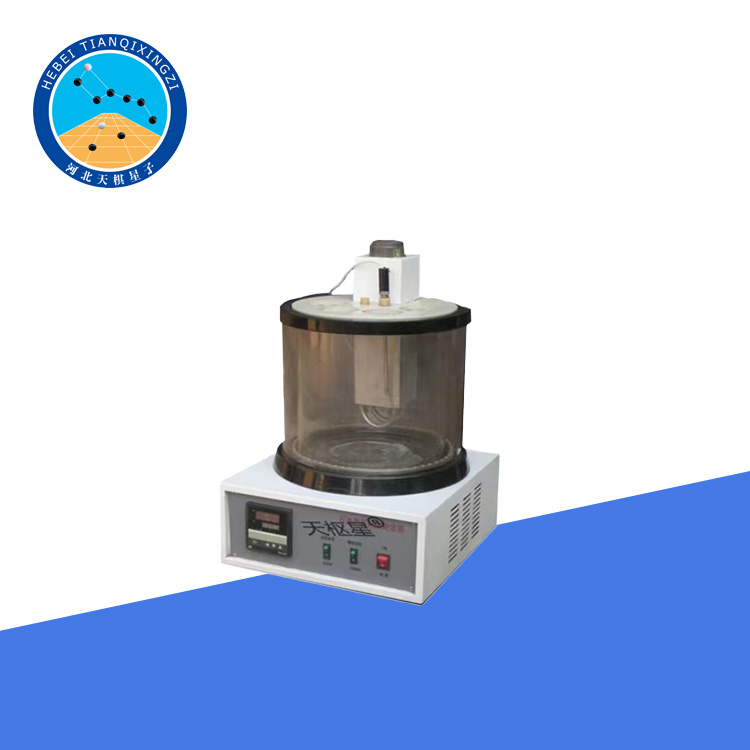
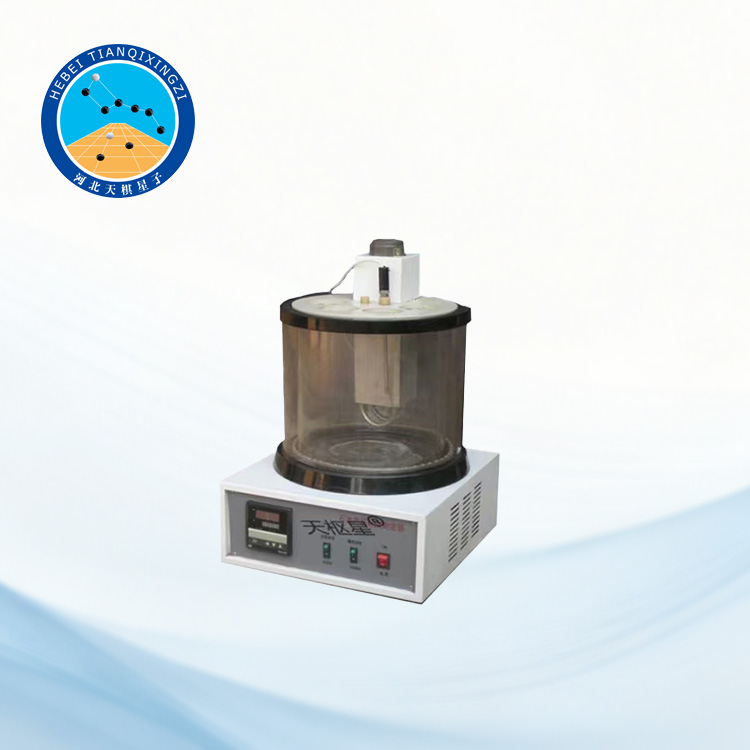
The High-Precision Digital Laboratory Kinematic Viscosity Tester for Asphalt accurately measures the kinematic viscosity of asphalt and bitumen at elevated temperatures, providing reliable data for quality control, research, and pavement performance evaluation.
Asphalt Kinematic Viscosity Tester
Model:TD619-1
I.Product Introduction:
The Asphalt Kinematic Viscosity Tester is designed according to China’s industry standard T0619 for measuring asphalt kinematic viscosity using the capillary method. It accurately determines the viscosity of asphalt samples at specified temperatures. Test results comply with China JTG 3410 highway engineering requirements and reference ASTM D2170 – Standard Test Method for Kinematic Viscosity of Asphalt at Elevated Temperatures.
II. Main Structure and Circuit Principle:
The instrument consists of a capillary viscometer, a mercury thermometer, an electric stirring device, an electric heating device, a temperature controller, a double-layer constant temperature bath, and a lighting lamp.
III. Main Technical Parameters:
1. Power Supply: AC 220V±10%, 50Hz±5%.
2. Heating Power: Two levels, 1000W and 650W.
3. Stirring Motor: 6W power; speed 1200r/min.
4. Temperature Range: Room temperature to 100℃.
5. Temperature control accuracy: ±0.1℃.
6. Constant temperature bath: Capacity, 20L; Form, inner and outer double-layer tank (double tank).
7. Operating environment: Ambient temperature -10℃~35℃, relative humidity <85%.
8. Temperature sensor: Industrial platinum resistance thermometer, with a calibration number of Pt100.
9. Total power consumption: Not exceeding 1800W.
10. Capillary viscometers: A set of 7, with inner diameters of 0.6, 0.8, 1.0, 1.2, 1.5, 2.0, and 2.5 mm respectively.
11. Weight: 30KG
12. External dimensions: 500x500x800mm
IV. Main Features:
1. Employs an intelligent temperature controller, ensuring rapid temperature control, fast response, minimal overshoot, and a temperature control accuracy of ±0.1℃.
2. Utilizes a hard glass cylinder and an insulated outer cylinder (referred to as a double-cylinder design),
providing excellent heat preservation performance,
and clear sample observation.
3. Adopting a desktop, all-in-one design, the instrument boasts excellent overall integrity and ease of use.
4. Equipped with an electric stirring device, ensuring uniform temperature within the bathtub.
V. Test Methods and Procedures:
1. Estimate the viscosity of the sample,based on the requirement that the sample takes more than 60 seconds to flow through a specified volume,select the appropriate model of vacuum capillary viscometer.
2. Clean the vacuum capillary viscometer thoroughly with solvents such as trichloroethylene. If the viscometer is oily, wash it carefully with cleaning solution or distilled water. After washing, dry it in an oven or blow it dry with hot air through cotton.
3. Prepare asphalt samples according to this specification T0602. Carefully heat the dehydrated and sieved samples until they are fully fluid. Stir appropriately during heating to ensure uniform heating. Then pour the samples into another small sample container (50 ml each) that is easy to pour into a capillary tube, and cover it tightly.
4. Heat the water bath and maintain the temperature within the range of 60℃±0.1℃. The thermometer should be pre-calibrated.
5. Place the selected vacuum capillary viscometer and the sample in an oven (135℃±5℃) and heat for 30 minutes.
VI. Operating Procedures:
1. Place the heated viscometer in a container, then inject the hot asphalt sample into the capillary viscometer through the self-filling tube A.
2. The sample should not stick to the tube wall, and the sample level should be within ±2 mm of the E mark. Place the capillary viscometer with the sample inside back into the electric oven (135℃±5.5℃) and maintain the temperature for 10 min±2 min to allow any air bubbles generated in the sample to escape.
3. Remove three capillary viscometers from the oven and cool them at room temperature for 2 minutes. Then, install them in a constant-temperature water bath to maintain the test temperature, ensuring that the I mark is at least 20 mm below the water surface. Remove the viscometer from the oven and place it in a constant temperature water bath.
