Spanish
 Russian
 Arabic

As an emerging road materials processing technology, asphalt foaming technology has been widely used in road engineering, airport runway construction, bridge construction, and other fields in recent years. This technology involves mixing asphalt with water to produce foamed asphalt, which offers good workability, adhesion, and crack resistance, helping to improve the performance of asphalt mixtures. This article provides a systematic overview of the development of asphalt foaming technology, examining its technological evolution and future application prospects.
I. Origins of Asphalt Foaming Technology
The origins of asphalt foaming technology can be traced back to the 1950s. At that time, with the development of road transportation, conventional asphalt mixtures gradually became less capable of meeting the growing demands of traffic. Researchers began exploring ways to improve asphalt fluidity and workability so that construction could be carried out more effectively, even under low-temperature conditions.
In 1956, a German research team first proposed the concept of asphalt foaming and conducted related experiments, marking the emergence of asphalt foaming technology.
II. Early Development of Asphalt Foaming Technology (1960s–1980s)
In the 1960s, asphalt foaming technology gradually gained acceptance in Europe and North America. In 1965, the first commercial asphalt foaming equipment was put into operation in Germany, followed by application studies in several countries. During the 1970s, continuous improvements in asphalt foaming equipment expanded the technology's applications, particularly in low-temperature road construction and the production of recycled asphalt mixtures.
In the 1980s, research into asphalt foaming technology entered a new phase. Researchers began systematically investigating the physicochemical properties of foamed asphalt and exploring its performance under different environmental conditions. During this period, key research focused on controlling the water-to-asphalt ratio, foaming temperature, and foaming time to achieve optimal foaming performance.
III. Technological Maturity and Widespread Adoption (1990s–2000s)
In the 1990s, asphalt foaming technology gradually matured, and standards for related equipment and processes began to be established. In 1993, asphalt foaming technology attracted widespread attention at an international asphalt technology conference as an innovative construction technique. Subsequently, countries around the world began conducting related research, promoting the standardization of the technology.
In the 2000s, the application of asphalt foaming technology expanded further, particularly in the construction of urban roads, airport runways, and highways. Foamed asphalt gained popularity due to its excellent workability and cost-effectiveness. Meanwhile, the environmental benefits of asphalt foaming technology became increasingly evident, making it an important option for sustainable development. During this period, research institutions and universities in many countries increased their investment in research and development, driving continuous technological innovation.
IV. Development of Modern Asphalt Foaming Technology (2010s to Present)
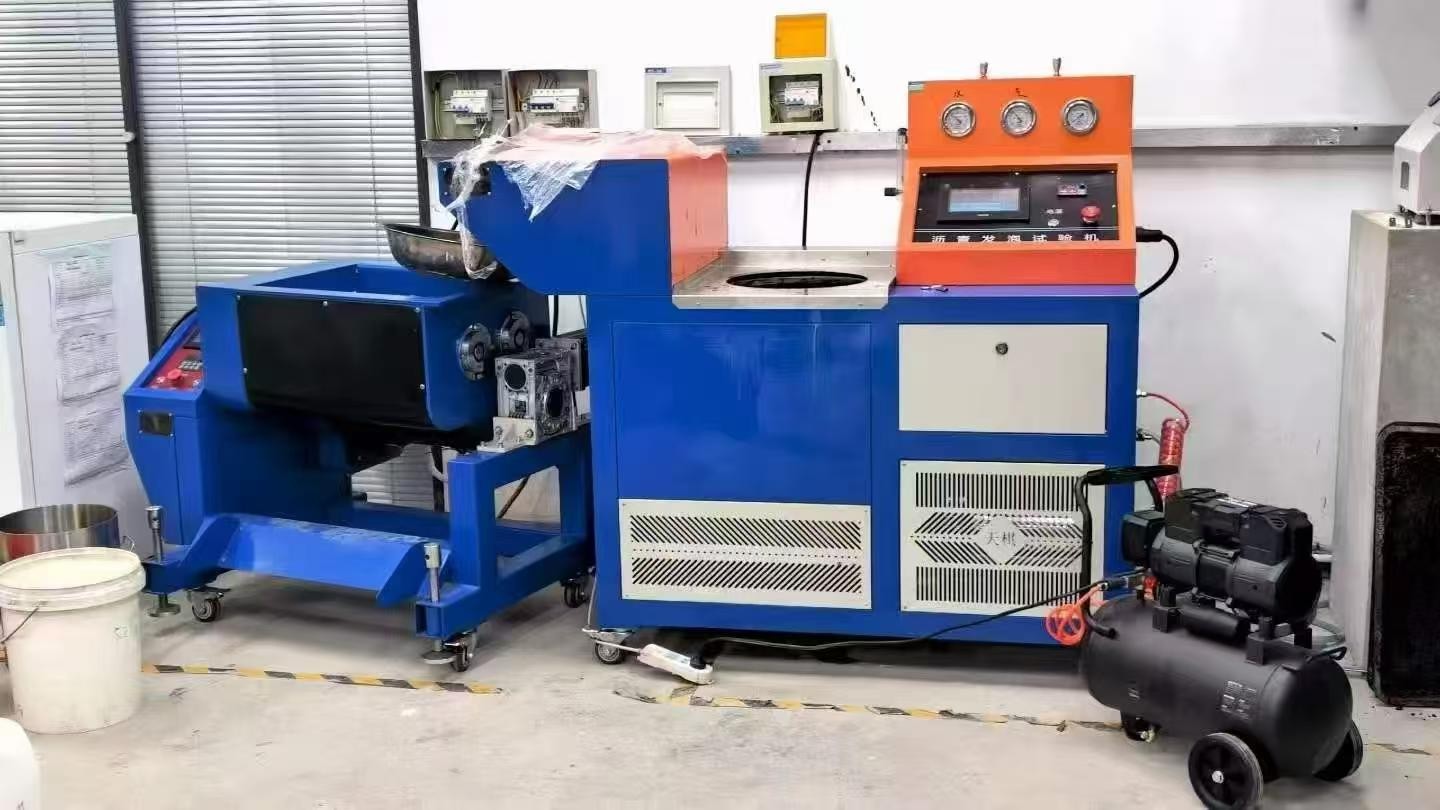
Since the 2010s, advancements in science and technology have ushered in new opportunities for the development of asphalt foaming technology. The emergence of intelligent and automated foaming equipment has significantly enhanced construction efficiency and quality. Concurrently, researchers have made notable progress in optimizing the formulations and performance of foamed asphalt; for instance, research into the addition of modifiers and recycled materials has effectively improved the strength and durability of the material.
Furthermore, as global emphasis on sustainable development and green construction grows, the environmental benefits of asphalt foaming technology are attracting increasing attention. Foamed asphalt effectively reduces energy consumption and greenhouse gas emissions while enabling the reuse of reclaimed asphalt in road construction, thereby aligning with the principles of a circular economy.
V. Future Prospects
Looking ahead, asphalt foaming technology will continue to develop toward greater efficiency, environmental sustainability, and intelligent operation. With the continuous emergence of new materials and processes, the performance of foamed asphalt is expected to improve further. Meanwhile, the application of digital technologies will create more opportunities to optimize asphalt foaming technology. For example, big data analytics and artificial intelligence can be used to monitor construction processes in real time, improving construction accuracy and efficiency.
In conclusion, since its emergence in the 1950s, asphalt foaming technology has undergone decades of development and has become an important technology in modern road engineering. With continued technological advancements and an expanding range of applications, asphalt foaming technology is expected to play an increasingly important role in future infrastructure construction.