


 Spanish
 Russian
 Arabic

To help industry colleagues better understand and master asphalt properties, our company has compiled comprehensive information on asphalt buoyancy testing. Through a systematic summary of testing equipment, operating procedures, and test reports, this document aims to provide reference and guidance for laboratory staff and road engineering technicians, helping to improve the scientific rigor and accuracy of asphalt quality testing.
I. Purpose and Scope
1.1 The buoyancy of asphalt is the time required for a sample to gradually soften and be broken by water in a specified flotation apparatus from the moment it is placed in a water tank at a certain temperature. It is measured in seconds.
1.2 The test shall be conducted at the specified temperature according to relevant specifications. Unless otherwise specified, the test temperature for the residue after distillation of liquid petroleum asphalt is 50℃, and the test temperature for coal tar pitch is 32℃ or 5℃.
1.3 This method is applicable to determining the buoyancy of the residue after distillation of slow-setting liquid petroleum asphalt, coal tar pitch, and other materials.
II. Instrument and Material Technical Requirements
2.1 Main Test Unit:
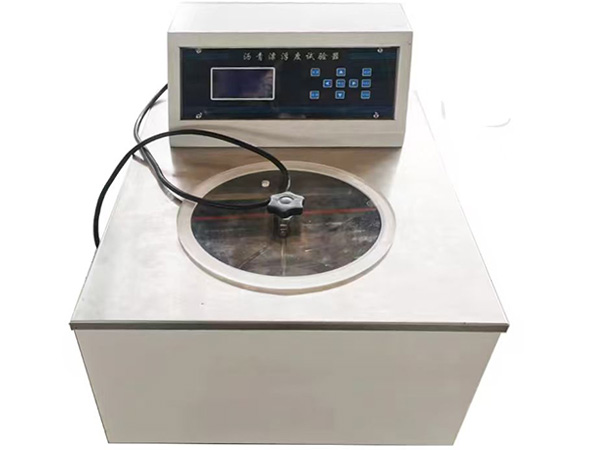
TD631-2 Asphalt Float Meter
2.2 Test Attachments:
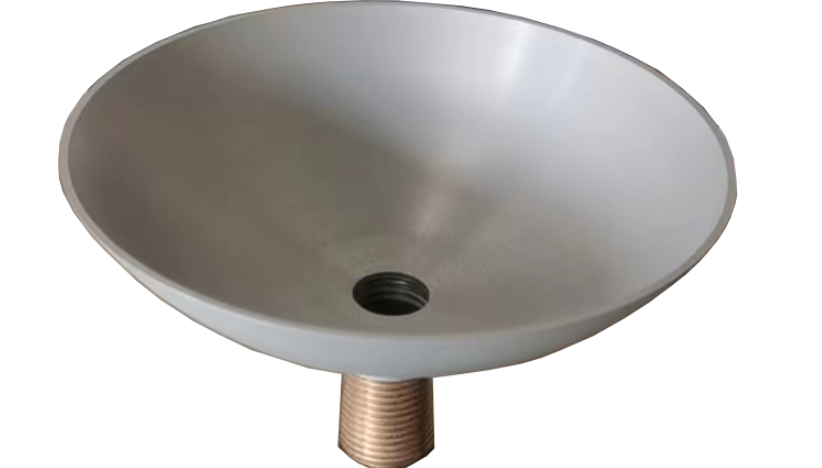
Two TD631-M1 type buoyancy floats: float wall thickness 1.4mm±0.1mm, controlled mass 37.9g±0.2g;
Two TD631-M2 type float gauge tubes: copper tube wall thickness 1.4mm±0.1mm, controlled mass 9.8g±0.2g.
The screw portion of the copper tube, after being screwed into the bottom hole of the float, should be sealed watertight. The total mass of the copper tube and float with the sample is 53.2g. After floating on the water surface, the edge of the float should be 8.5mm±1.5mm from the water surface.
2.3 Other Auxiliary Equipment:
2.3.1 One multi-functional electric furnace
2.3.2 Glycerin and talc (as a separating agent): The ratio of glycerin to talc is 2:1 (by mass).
2.3.3 Two copper or glass plates.
2.3.4 Stopwatch: 0.1s graduation.
2.3.4 Others: A scraper, ice or a refrigerator, an alcohol lamp, etc.
III.Methods and Procedures
3.1 Preparation
3.1.1 Apply a thin layer of glycerol-talc release agent to a copper or glass plate, and place the copper tube with the smaller end facing down on the plate.
3.1.2 After preparing the asphalt sample according to this specification T0602, fill the copper tube, ensuring it protrudes above the tube surface.
3.1.3 Adjust the temperature of the insulated water tank to the required level using ice.
3.1.4 After cooling the asphalt sample at room temperature for approximately 15-60 minutes, place it, along with the base plate, in a water bath at a temperature of 5℃ ± 1℃ for 5 minutes. Coal tar pitch samples can be placed in a water bath at a temperature of ± 1℃ immediately after injection for 5 minutes.
Subsequently, remove the copper tube, scrape off any protruding parts of the sample with a hot knife, ensuring the tube opening is flush; then return it to the water bath at the specified temperature for 15-30 minutes.
3.1.5 Heat the water in the flotation apparatus's water bath to the test temperature; the bottom of the thermometer's mercury bulb should be 1mm ± 2mm below the water surface.
3.2 Test Procedure
3.2.1 After the sample is kept in a water bath at 5℃ for 15-30 minutes, tighten the copper tube into the bottom hole of the float, and then place it back into the 5℃ water for 1 minute. Note that if there is leakage after the copper tube is installed in the bottom hole of the float, a small amount of grease can be applied to the screw part of the copper tube before screwing it into the bottom hole of the float.
3.2.2 After 11 minutes, remove the float apparatus and quickly wipe the water off the dish with a cloth; then place it in the float apparatus water tank maintained at the specified test temperature, and simultaneously start the stopwatch.
3.2.3 The sample softens under heat and is gradually flushed out of the copper tube. When the water at the specified temperature causes the sample inside the copper tube to rupture and immerse in the float dish, immediately stop the stopwatch and record the time, accurate to 1 second.
IV. Report
The same sample shall be tested in parallel at least twice. When the difference between the two test results is no greater than 4 seconds, the average value shall be taken as the test result.
Conclusion: This article is based on JTD3410 T0631—1993, with reference to ASTM D139 and AASHTO T50, and has been partially modified or supplemented by ASTM D490, ASTM D139—77, and AASHTO T50—81 (1986). In case of any discrepancies, please refer to the original standard.
