


 Spanish
 Russian
 Arabic

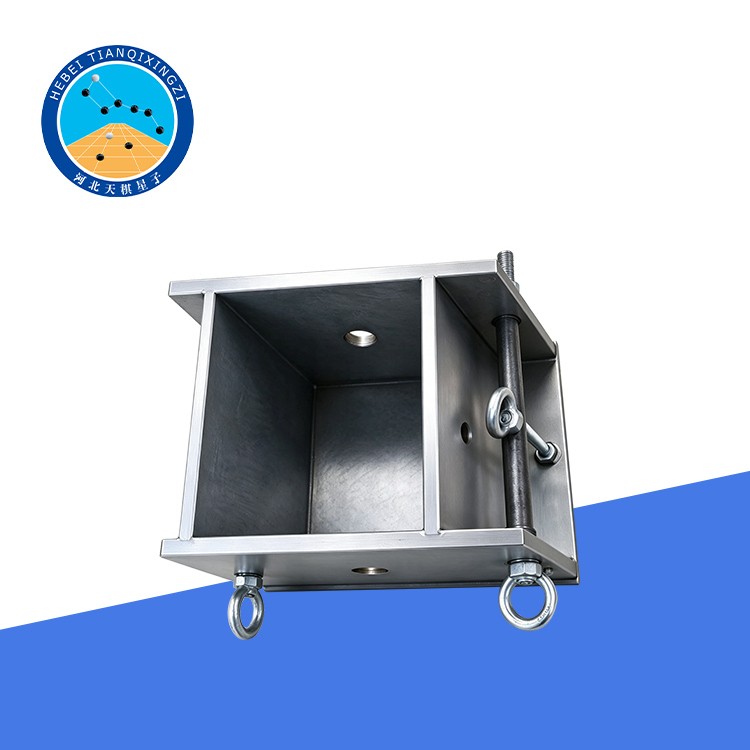

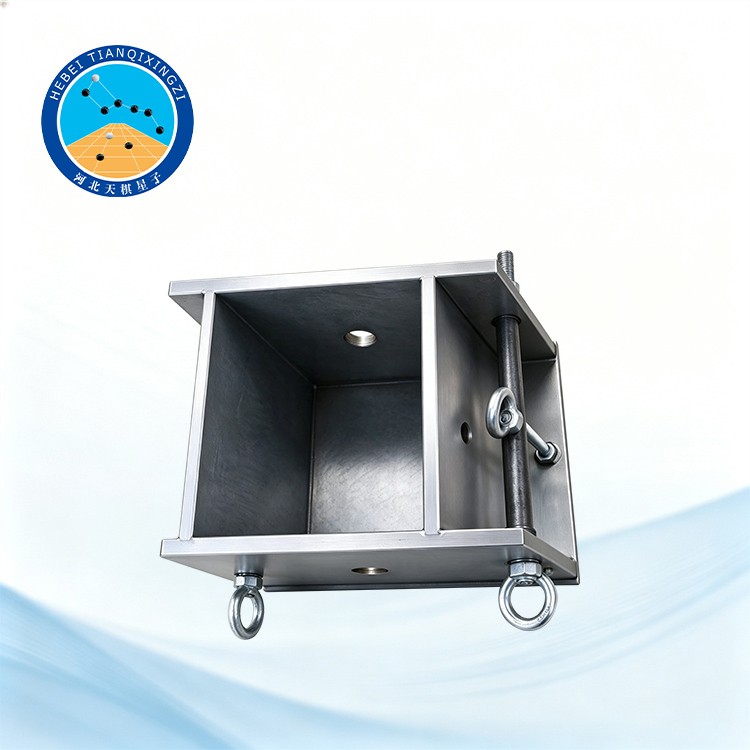
Products Description
The Concrete-Rebar Bond Strength Test Mold is designed for preparing concrete specimens used to evaluate the bond strength between reinforcing steel bars and concrete. It is suitable for producing 150 mm × 150 mm × 150 mm concrete cube specimens for rebar pull-out and bond strength testing. Ideal for construction materials laboratories, civil engineering research, and concrete quality testing.
Concrete-Rebar Bond Strength Test Mold
Model: TD564-M
I. Product Introduction
The Concrete-Rebar Bond Strength Tester is designed to compare the bond strength between different concrete mixtures and the same type of reinforcing steel bar. It is used in conjunction with 30-ton, 60-ton, or 100-ton universal testing machines to evaluate the ability of concrete to resist reinforcing bar slip.
The instrument is designed in accordance with the requirements of GB/T 50081-2002, Standard for Test Methods of Mechanical Properties of Ordinary Concrete, and SD 105-82, Test Code for Hydraulic Concrete.
Equipped with a high-precision intelligent measuring instrument, the system uses a computer-based data acquisition and processing unit to monitor and process test data throughout the testing process. It offers easy operation and accurate test data, making it suitable for laboratory testing and comparative evaluation of concrete-rebar bond performance.
Reference Standards: ASTM A944-22, ASTM C900-25
II. Technical Specifications
1. Specimen dimensions: 150 × 150 × 150 mm
2. Dial indicator: 0–1 mm (resolution: 0.001 mm)
3. Overall dimensions: 589 × 250 × 150 mm
4. Weight: 24 kg
III. Operating Instructions
1. Cast the reinforcing steel bar and concrete together to form a specimen, then cure it according to the specified requirements.
2. Install the dial indicator at the end of the reinforcing bar that protrudes a shorter distance from the concrete, and secure it firmly.
3. Place the specimen on the fixture, ensuring that the end of the reinforcing bar protruding farther from the concrete passes through the central hole at the bottom of the fixture.
4. Install the fixture assembly on the universal testing machine.
IV. Test Procedure
The test shall use deformed reinforcing steel bars that meet the requirements for concrete-rebar bond testing specified in GB 1499-91, Hot-Rolled Ribbed Steel Bars for the Reinforcement of Concrete. The calculated diameter of the reinforcing bar shall be 20 mm, with a nominal core diameter of 18 mm and an outside diameter of 22 mm.
To provide sufficient length for gripping by the universal testing machine and for mounting the measuring instrument, the reinforcing bar is generally recommended to be approximately 500 mm long.
All reinforcing bars shall have the same dimensions, shape, and rib pattern. Before casting, the bars shall be cleaned with a wire brush and wiped with acetone to remove any steel particles, oil, or grease.
The end face of the free end of the reinforcing bar shall be smooth and flat and shall fit the corresponding recessed opening reserved in the specimen mold.
When necessary, a 20 mm diameter plain round reinforcing bar may also be used.
Note: The calculated diameter of a deformed reinforcing bar is equivalent to the diameter of a plain round bar having the same cross-sectional area.
V. Test Results and Calculations
1. Calculation of Slip Deformation: Subtract the initial dial indicator reading from the reading recorded at each load level to obtain the slip deformation corresponding to that load.
2. Calculation of Bond Strength for Deformed Reinforcing Bars: Calculate the arithmetic mean of the slip deformation measurements obtained from six test specimens and use the average values to plot the load–slip deformation curve, with the applied load on the vertical axis and slip deformation on the horizontal axis.
At slip deformation values of 0.01 mm, 0.05 mm, and 0.10 mm, determine the corresponding loads from the curve. Calculate the arithmetic mean of these three load values and divide it by the surface area of the reinforcing bar embedded in the concrete to obtain the bond strength (MPa).
Note: A load–slip deformation curve may also be plotted for further analysis of the bond behavior between the reinforcing bar and concrete.
