


 Spanish
 Russian
 Arabic


Products Description
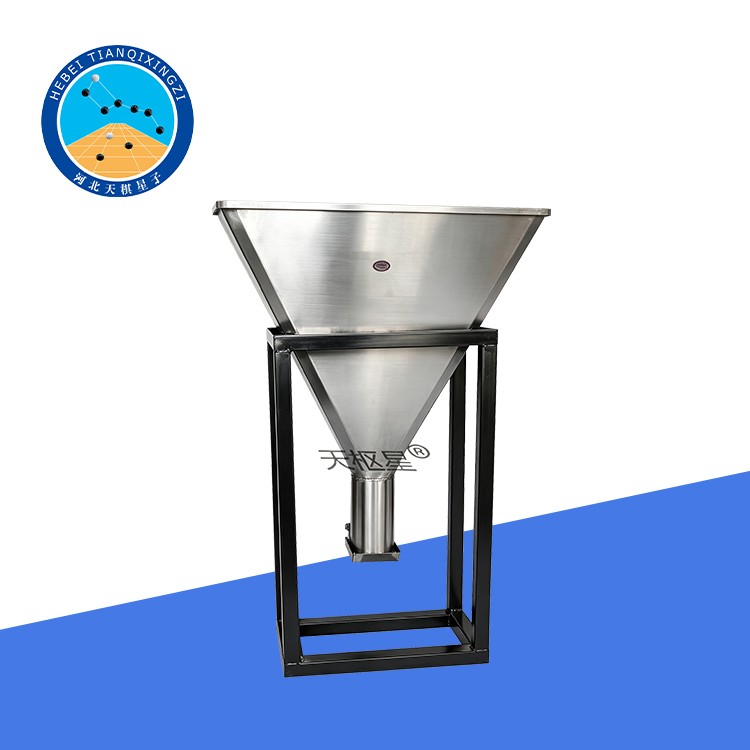
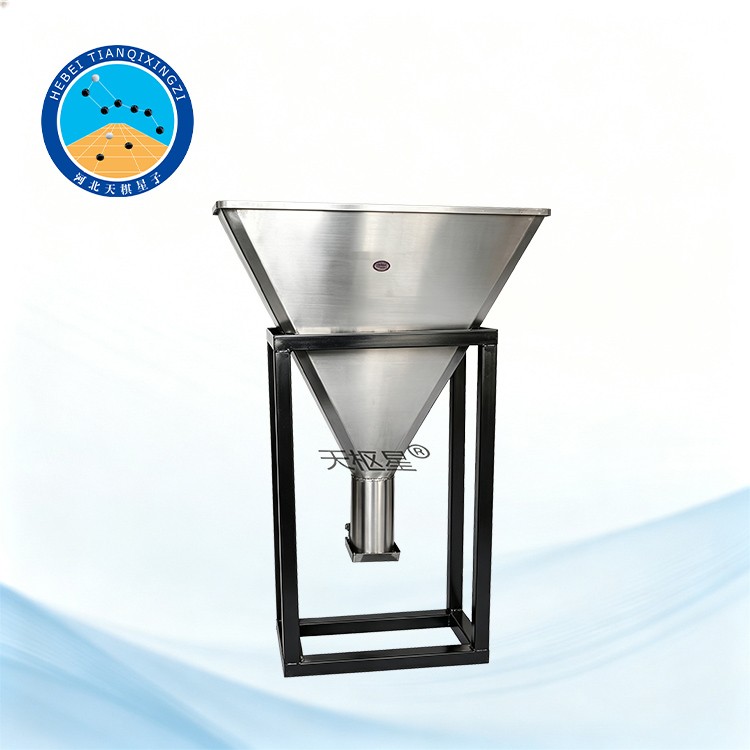
Self-Compacting Concrete V-Funnel Test Apparatus is designed to evaluate the viscosity, flowability, and segregation resistance of self-compacting concrete (SCC) by measuring its flow time through a V-shaped funnel. It is suitable for quality control and laboratory testing of fresh concrete.
Self-Compacting Concrete V-Funnel Test Apparatus
Model: TDHZ-V1
I. Product Introduction
The DHZ-V1 Concrete V-Funnel for Testing the Viscosity and Segregation Resistance of Concrete Mixtures is manufactured by Hebei Tianqixingzi Inspection Equipment Co., Ltd. in accordance with the test requirements specified in DLT 1448-2015, Test Code for Concrete of Power Engineering. The TDHZ-V1 Concrete V-Funnel is used to determine the viscosity and segregation resistance of self-compacting concrete (SCC).
Reference Standard: EN 12350-9
II. Technical Specifications
1. Capacity: 10 L
2. Material: Stainless steel
III. Operating Procedure
1. Prepare the fresh concrete sample according to the requirements specified in Section 4.1.
2. Rinse the V-funnel thoroughly with clean water and wipe it with a damp cloth to keep the inner surface moist. Place the V-funnel on the support stand and ensure that it is securely positioned, with the top surface level and the funnel in a vertical position.
3. Place the 12 L bucket beneath the V-funnel and make sure that the bottom outlet gate is closed.
4. Use a 5 L plastic bucket to hold the concrete sample, and pour the sample into the V-funnel steadily from the top until the funnel is completely filled.
5. Use a trowel to level the top surface of the concrete along the upper edge of the V-funnel.
6. After leveling the top surface of the concrete, allow the sample to stand for 1 minute. Then open the bottom outlet gate of the V-funnel and use a stopwatch to measure the time (t₀) from opening the gate until all the concrete has flowed out of the funnel, accurate to 0.1 s. At the same time, observe and record whether any blockage or other abnormal flow occurs.
7. If the fresh concrete has relatively high viscosity and it is difficult to determine the flow completion time, observe the concrete from above the V-funnel. The moment light becomes visible through the funnel indicates that the concrete has completely flowed out through the outlet.
8. The measurement of the t₀ flow time should preferably be performed twice on the sample within 5 minutes.
IV. Test Result Processing
The t₀ flow time is calculated as the average of the two test results, with the result recorded to the nearest 0.1 s.
V. Product Features
1. Simple and reliable operation: The V-funnel test method provides a straightforward way to evaluate the flow behavior of fresh self-compacting concrete by measuring its discharge time.
2. Stainless steel construction: The V-funnel is made of stainless steel, providing good corrosion resistance and easy cleaning after testing.
3. Stable test structure: The rigid support stand helps keep the funnel securely positioned during the test, contributing to consistent test conditions.
4. Suitable for laboratory and quality control: The apparatus can be used for routine testing, mix proportion verification, concrete development, and quality control of fresh SCC.
5. Easy flow-time measurement: The discharge time can be measured directly with a stopwatch, making the test convenient for daily laboratory use.
VI. Application
The Self-Compacting Concrete V-Funnel Test Apparatus is mainly used for testing the flowability and viscosity-related flow characteristics of fresh self-compacting concrete. The measured V-funnel flow time can be used to assess the filling behavior of SCC and compare the flow characteristics of different concrete mixtures.
It is suitable for:
Self-compacting concrete (SCC) mix design and development;
Fresh concrete quality control;
Concrete laboratory testing;
Comparison of different SCC mix proportions;
Research on concrete admixtures and workability;
Construction material testing laboratories;
Universities, research institutes, and quality inspection laboratories.
