


 Spanish
 Russian
 Arabic


Products Description
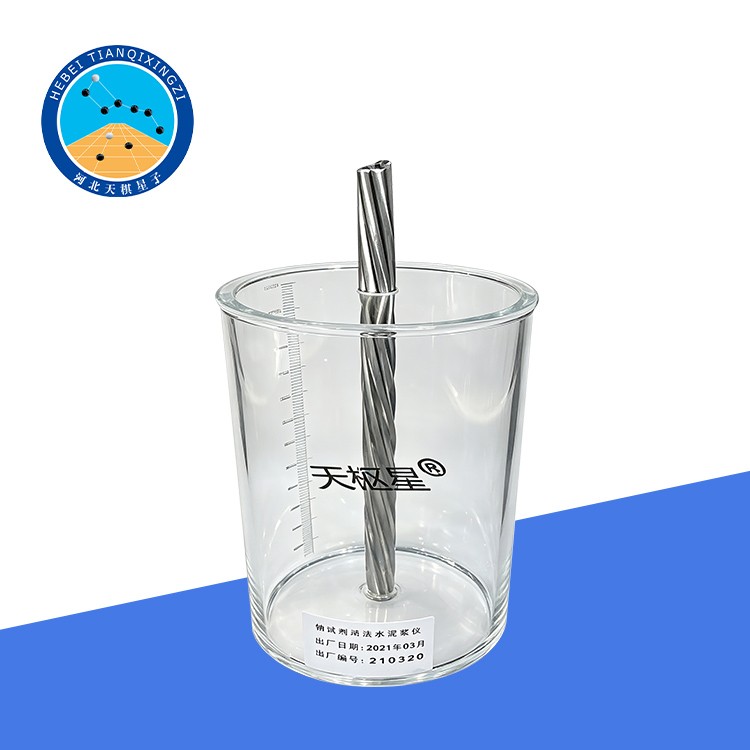
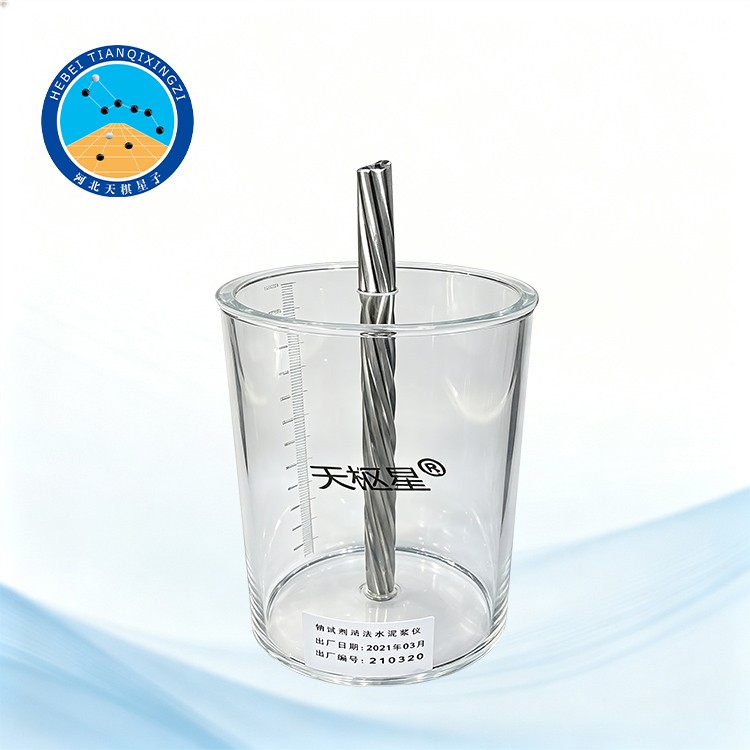
The Cement Grout Interwire Bleeding Test Cylinder is designed to determine the bleeding rate of cement grout between prestressing steel wires. It is suitable for laboratory testing and quality control of prestressed concrete grouting materials, helping evaluate grout stability and bleeding performance.
Cement Grout Interwire Bleeding Test Cylinder
Model: TD517-1
I. Product Description
The Cement Grout Interwire Bleeding Test Cylinder complies with JTG/T F50-2011, Technical Specifications for Construction of Highway Bridges and Culverts, and the Technical Guide for Grouting of Prestressed Tendons in Highway Bridges. The test cylinder is made of transparent acrylic and is equipped with a sealing cover. It has an inner diameter of 100 mm and a height of 160 mm. During the test, a bundle of 7-wire prestressing steel strand is placed in the center of the cylinder. The exposed height of the steel strand bundle inside the cylinder is 10–30 mm.
Reference Standards: ASTM C940, EN 445
II. Test Procedure
Place the Cement Grout Interwire Bleeding Test Cylinder on a level surface. Pour approximately 800 mL of thoroughly mixed cement grout into the container and record the exact volume of the grout.
Securely close the sealing cover, then insert the steel strand bundle into the center of the container.
After standing for 3 hours, use a pipette to extract the separated water from the surface of the grout. Transfer the collected water into a 10 mL graduated cylinder and measure the bleeding volume, recorded as V₁.
III. Technical Specifications
1. Inner diameter: Approx. 3.3 cm
2. Outer diameter: Approx. 3.8 cm
3. Length: 2 meters
4. Material: Double-layer stainless steel tubing
Also available in other specifications, such as 0.5 m, 1 m, and 1.5 m.
IV. Applications
The Cement Grout Interwire Bleeding Test Cylinder is mainly used to determine the bleeding performance of cement grout between prestressing steel wires. It is suitable for:
Testing the bleeding rate of cement grout used for prestressed concrete structures;
Quality control of prestressed tendon grouting materials;
Laboratory testing and research of cement-based grouting materials;
Evaluation of the stability and bleeding characteristics of cement grout.
V. Main Features
Made of transparent acrylic for easy observation of the grout and separated water.
Equipped with a sealing cover to help maintain stable test conditions.
Designed for testing the bleeding of cement grout between 7-wire prestressing steel strands.
Compact structure and simple operation.
Suitable for laboratory testing and quality control applications.
Complies with the relevant requirements of JTG/T F50-2011 and related prestressed grouting test methods.
VI. Test Result
After the specified standing period, the separated water is collected and measured using a graduated cylinder. The measured bleeding volume V₁ is used to calculate the bleeding rate of the cement grout according to the applicable test method.
The test results can be used to evaluate the bleeding characteristics and stability of cement grout and provide a reference for the quality control of prestressed tendon grouting materials.
