


 Spanish
 Russian
 Arabic

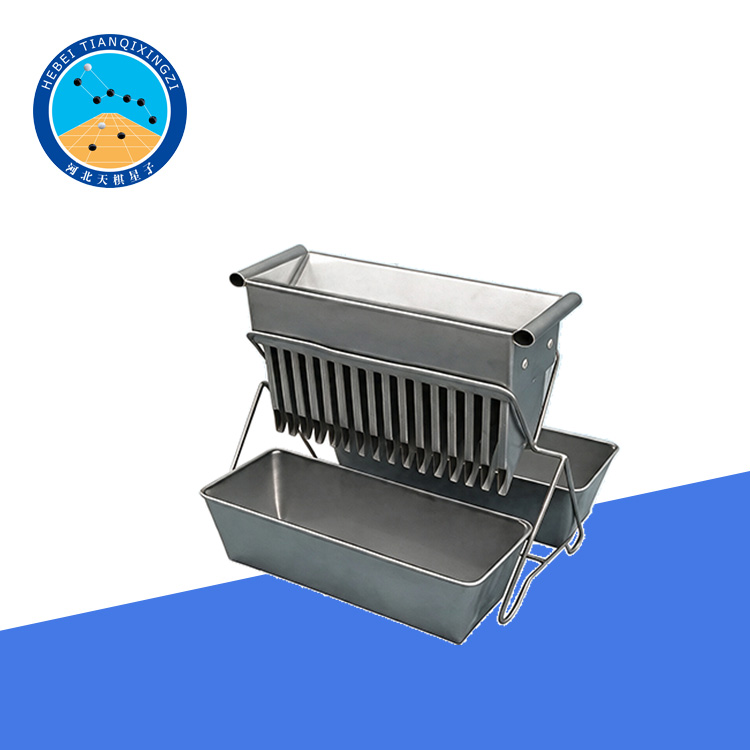

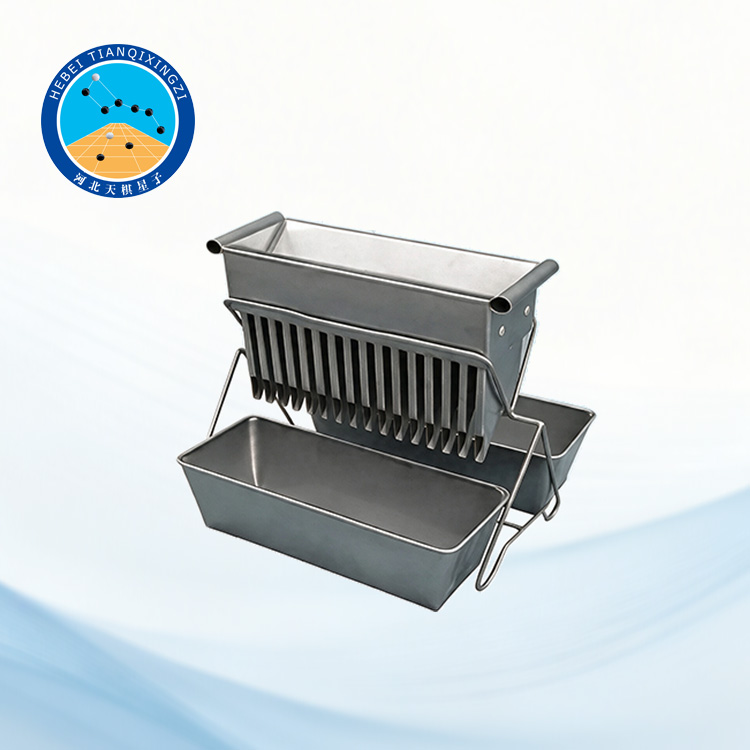
Products Description
Based on the principle of sample division, the instrument evenly divides a sample into two representative portions after passing through the splitter. It is mainly used as a sample reduction device during sample preparation. It is suitable for the sample reduction and analysis of coal, coke, ores, and other granular materials.
Riffle Sample Splitter for Aggregate Testing
Model:TD301-1/2/3
I. Product Overview
This Sample Splitter is developed and manufactured by our company in accordance with JTG E42-2005 “Test Methods of Aggregate for Highway Engineering”.
The fully enclosed sample splitter is available in two types:
Fully Enclosed Galvanized Steel Sample Splitter
Fully Enclosed Stainless Steel Sample Splitter
Applicable / Reference Standards:
JTG E42-2005, ASTM C702/C702M, UNI 8520, EN 933-3, ASTM C136/C136M, NF P18-553, AASHTO T27, AASHTO T87, BS 812:1, BS 1377-2, BS 1924-1, UNE 83120
II. Technical Specifications
Model Size | Number of Chutes | Chute Width (mm) | Sample Division Accuracy (%) |
Large | 18 | 15 | < 6 |
Medium | 24 | 7.5 | < 3 |
Small | 32 | 5 | < 1.25 |
III. Product Features
1. Reasonable structure and easy operation, with multi-point sample reduction capability.
2. Provides excellent sample division uniformity, improving the efficiency and quality of sample reduction.
3. The chute width is 2.5–3 times the maximum particle size of the coal sample. The inclination angle of the inclined surfaces between the chutes is not less than 60°.
IV. Structural Composition
The instrument mainly consists of a sealed housing, chutes, sample receiving containers, and a scoop. The inclination angle of the inclined surfaces between the chutes is not less than 60°.
V. Instructions for Use
1. Clean the inside of the sample splitter thoroughly. Close the funnel gate and place the sample receiving containers in position.
2. Pour the sample evenly into the funnel from a height of approximately 5 cm above the inlet of the sample splitter. Level the sample surface, then open the funnel gate. The sample will be evenly divided and discharged into the two receiving containers.
3. After the sample has completely passed through the splitter, gently tap the splitter by hand, close the funnel outlet, and repeat the above sample splitting procedure using the two receiving containers.
4. Continue the splitting process until the amount of sample in one receiving container is close to the required test sample weight.
VI. Important Notes
1. The chute width of the sample splitter should be at least three times the nominal maximum particle size of the coal sample to be reduced. All chutes should have the same width and remain parallel.
2. Before use, clean all chutes thoroughly to ensure there is no blockage.
3. The sample must be fed into the sample splitter in a reciprocating, column-shaped motion. The swinging range should not exceed the two ends of the splitter. No accumulation of material is allowed on the splitter chutes.
4. After sample reduction, either side of the divided sample may be selected for testing. If multiple reductions are required, samples should be retained alternately from both sides.
5. When reducing samples with high moisture content, do not feed excessive material at one time. At the same time, gently vibrate the sample splitter to prevent wet samples from blocking the chutes.
6. Before using the sample splitter for coal sample reduction, the coal sample does not need to be mixed before splitting. During feeding, the scoop should be tilted toward one side and moved back and forth along the length direction of the splitter, ensuring that the coal sample passes through the splitter as evenly as possible. After reduction, a sample from either side can be selected for testing.
