


 Spanish
 Russian
 Arabic

I.What is Flame Ionization Detection(FID)for Asphalt Components?
Flame Ionization Detection(FID)for asphalt components is a commonly used method for analyzing the content and composition of organic components(especially hydrocarbons)in asphalt or petroleum mixtures.
1.Principle
The core idea ofFID is that hydrocarbons burn in a hydrogen flame to produce ions.
When asphalt components are vaporized and enter the hydrogen flame,the carbon in the organic molecules generates ions and free radicals during combustion.
The ions generated in the flame form a current between the electrodes,and the magnitude of this current is almost directly proportional to the hydrocarbon content.
Therefore,FID can quantitatively analyze the content of various organic components in a mixture.
II. Materials and parameter settings for a gas analyzer based on a flame ionization detector (FID) for asphalt components.
1.A typical asphalt component FID gas analyzer requires the following materials:
1.1 Flame Ionization Detector(FID):This instrument utilizes the combustion of hydrogen to ionize the carbon in asphalt components and measures the resulting ion current,recording the chromatogram of the ion current.
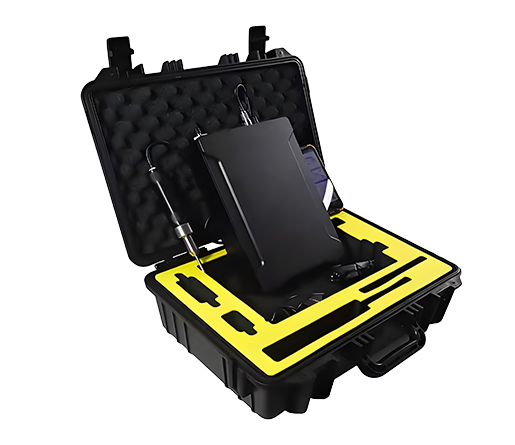
1.2 Chromatography rods:Silica gel rods approximately 0.9 mm in diameter and 150 mm in length,with the 136 mm section coated with silica gel particles of approximately 5μm in diameter and 0.05 mm thick.A stainless steel rod holder is included,capable of holding 10 rods at a time.
1.3 Developing Tank:A container filled with solvent vapor,capable of holding one chromatographic rod holder at a time,allowing the solvent to develop on the rod.To maintain the steam density in the container,filter paper was placed inside the tank.There are three developing tanks;different developing tanks are used for different solvents during the experiment.
1.4 Desiccator.
1.5 Microsyringe:1μL graduation.
1.6 Glass containers:50-100 mL stoppered flasks;100 mL graduated cylinders.
1.7 Balance:Maximum weighing capacity 500 g,sensitivity 1 mg.Analytical balances should preferably be protected with antistatic coated glass wind shields.
1.8 Dichloromethane:Purity≥99.5%.
1.9 n-Hexane:Purity≥96.0%.
1.10 Toluene:Purity≥99.5%.
1.11 Methanol:Purity≥99.8%.
1.12 Hydrogen:Purity≥99.99%.
2.Test parameter settings
Parameter | Setting | Parameter | Setting |
Hydrogen Flow | 160 mL/min | Minimum Area | 2000μV·s |
Air Flow | 2 L/min | Minimum Height | 10μV |
Scan Rate | 30 s/scan | Minimum Width | 0.020 min |
Attenuation | 64 mV/F.S. | Peak Splitting | Draw vertical line when developing solvent reaches position |
End Time | 1 min | Component Content Calculation | Percentage of peak area |
Note:Set the test parameters according to the requirements of Table T0634-1.
III.Reducing Factors Affecting Measurement Results
1.Flame Stability
The hydrogen flame is the core of the FID detector.Flame instability leads to fluctuations in ionization efficiency,resulting in unstable current signals and affecting measurement repeatability and accuracy.Flame stability is affected by hydrogen flow rate,air flow rate,and mixing ratio.
2.Sample Homogeneity
The asphalt composition is complex.Uneven distribution of light and heavy components can cause signal deviations after sample injection,affecting quantitative results.Samples must be fully dissolved and uniformly mixed,and filtered if necessary,to ensure representative sampling.
3.Injection Volume Accuracy
Over-injection may cause peak tailing or abnormal peak shape,while under-injection will result in a weak signal,leading to measurement errors.A microsyringe must be used to strictly control the injection volume to ensure consistency with each injection.
4.Detector Cleaning and Calibration
Carbon buildup or contamination on the flame chamber and electrodes can reduce ionization efficiency,leading to signal attenuation or drift.At the same time,detector aging can also affect sensitivity.Regular cleaning and calibration ensure accurate and reliable signals.
5.Gas Purity
FID requires high purity for both the carrier gas and hydrogen.If the gas contains moisture,oil mist,or oxides,it will interfere with the ionization process,causing signal fluctuations or drift.Using high-purity gases and installing purification devices can reduce interference.
6.Stable Ambient Temperature and Humidity
Flame ionization and sample vaporization processes are sensitive to temperature and humidity.Temperature fluctuations can alter the sample evaporation rate,and excessive humidity may cause the solvent or chromatographic rod to absorb water,thus affecting chromatographic separation and signal intensity.Maintaining stable laboratory temperature and humidity,and using a desiccator when necessary,can improve measurement repeatability.
